Created by
Aquil Virani,
Fellow, I Love My Gig Ontario 2025
Published
February 4, 2026
1. What is “Masked Mondays”?
Masked Mondays is a campaign to keep culture accessible to all, asking cultural spaces to join a growing list of galleries, theatres, and venues in implementing recurring “mask-mandatory” periods for people who prefer or need to enjoy safer, masked cultural experiences.
“For those of us who want or need a masked environment, this option provides an opportunity for us to join in and access culture,“ says Aquil Virani, a visual artist living with disability, who collected various resources and perspectives from mask-wearing friends and colleagues to assemble and present the Masked Mondays campaign.
A masking policy helps all sorts of community members attend cultural venues: health-conscious individuals, elders and elderly people, disabled folks or people who are immunocompromised, caregivers who want to protect their clients or loved ones, and collectivist-minded people who want to safeguard the health and wellbeing of others.
A 2-minute video of participants holding up their artwork, voicing their submission starting with “I still mask because…” Aquil’s voice says at the end, like a narrator: “Adopt the Masked Mondays policy and help keep culture accessible to everyone. Read more at maskedmondays.ca.”
2. Why should I adopt such a policy? Here are 9 reasons.
It’s just the right thing to do. Adopting recurring access to a masked environment keeps culture accessible to all. Whether attendees are immunocompromised, elderly, or simply health-conscious or community-minded, a masked environment – at the very least, some of the time – helps your supporters visit your space and enjoy what you do. A mask-mandatory period creates a predictable environment where visitors can make informed choices about their daily risk.
It might help drive attendance. It’s not our main motivation, but instituting a mask policy – and gently enforcing it – is “good for business” too. Many potential supporters won’t attend in-person because they are not comfortable with the risk. You could be a theatre, an art gallery, or a cultural hub, and ensuring safe, masked access will engage a new group that is currently staying at home.
It helps keep everyone safe. A masked environment is safer for everyone – that much is clear. It’s safer for staff who can disrupt operations if they get sick. It’s safer for visitors, whether or not disabled. It’s safer for artists, performers, and facilitators too. Wearing a mask not only protects the mask-wearer, but everyone around them. And if everyone wears a mask, everyone is safer.
It’s about more than Covid and Disabled people. Masking isn’t just about the pandemic, even if COVID-19 is the subtext that seems obvious. This is about more than disabled people too. There are numerous respiratory illnesses circulating at any moment with long-term health consequences. Many call the pandemic a “mass disabling event” because of the long-term effects of so many viral infections. And plenty of non-disabled people continue to mask because they would rather access culture in a safer environment with lower risks to their health.
It’s not over because you ignore it. The pandemic persists. When disabled folks hear “back during the pandemic,” we remind ourselves “it’s still going, in a way, even if broader society is ignoring it and moving on.” Respiratory illnesses are here to stay, and viruses don’t care that political leaders have decided that it’s no longer worth addressing.
Safety is integral to inclusion. We’re not “included” if your space is unsafe. Many cultural spaces will build a ramp or hang a pride flag, but disregard that inclusion necessitates safety as a baseline. Mask-mandatory spaces should be mandatory in our view, but you can implement specific periods of mask-mandated time as a compromise. And gently enforcing your masking policy with free masks on hand ensures the environment is predictably safe instead of a mixed bag of masked audiences and unwitting visitors.
It’s like sensory-friendly shows, but for masks. We already do this, in a way. We accept and include different bodies and abilities when a theatre schedules a “sensory-friendly” screening, or a play is presented during a “child-friendly show.” Different people need different things, and one way to navigate “access conflicts” is to schedule different parameters at different times.
Masking is community care. As Nakita Valerio said in a viral post on social media, “Shouting ‘self-care’ at people who actually need community care is how we fail people.” Accessing art is part of a healthy, vibrant life, and disabled people (and health-conscious people) deserve that too.
It helps you “walk the walk.” Cultural spaces often “talk the talk” of equity, diversity, accessibility and inclusion. Yes, these ideals serve as important compasses. But “walking the walk” requires action. And living those values requires implementing safer environments, even if it takes a bit of work and planning.
3. How can I adjust this idea for my specific venue?
Maybe you want to do “Masked Tuesdays” or “Wear-A-Mask Wednesdays.” Maybe you have the perfect time slot, like “Masked Monday Mornings” or “Masks on the First Friday of every month” (alliteration always appreciated, but not necessary.) You might start a new time slot that is mask-mandatory from the beginning to avoid any confusion. The idea is to have recurring periods of mask-mandated access. Make it your own.
4. Have any spaces continued with mask mandates as of now?
Yes, definitely.
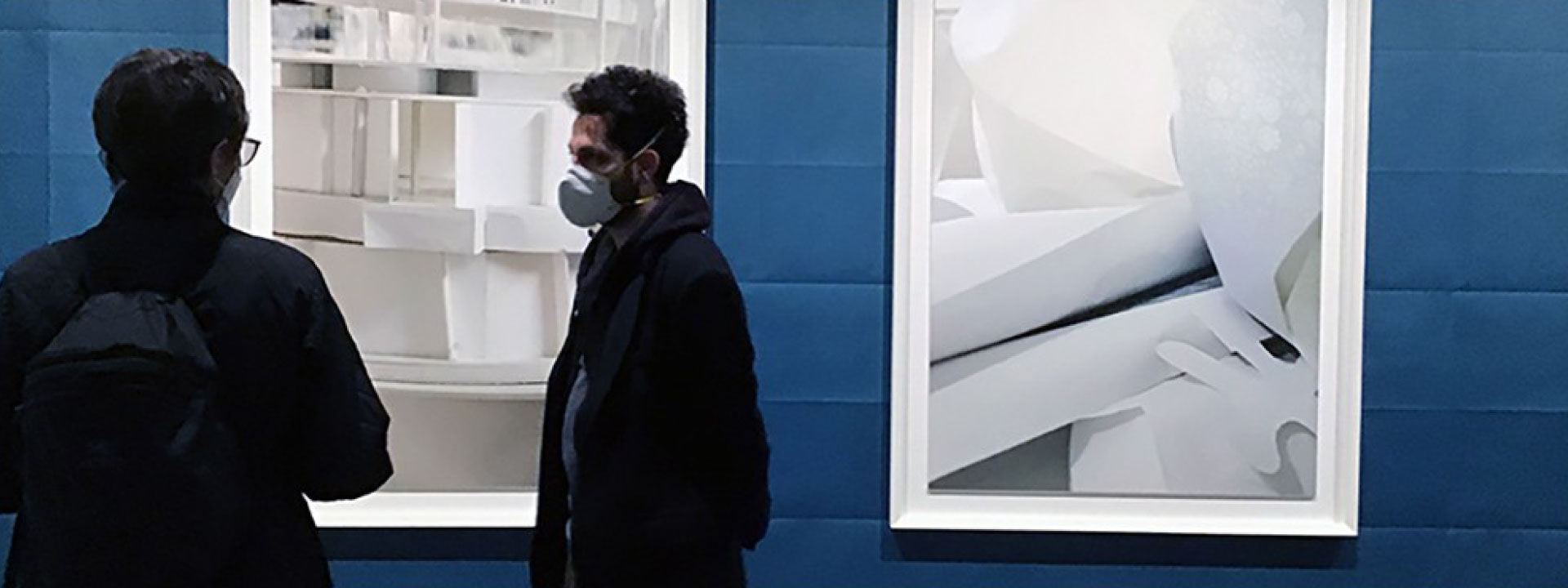
The Workers Arts & Heritage Centre (WAHC) just relaxed its full mask mandate, keeping Wednesdays as a mask-mandatory day and safeguarding some other respiratory measures.
Hamilton Artists Inc. followed a similar timeline, relaxing its mask mandate to a specific day of the week while ensuring that free masks and hand sanitizer would always be available to all visitors.
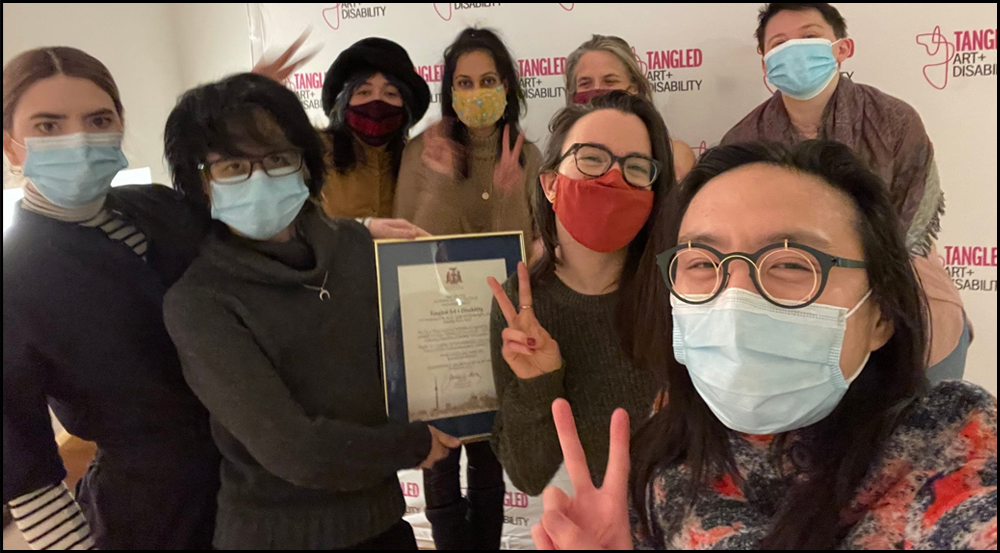
Another example: Tangled Arts + Disability (401 Richmond Street West, Toronto) continues with a mask mandate to this day. Even after many institutions have “moved on” from the COVID-19 pandemic, the need for masked access remains. “We ask all of our visitors to mask and politely enforce these rules with care and compassion,” says Sean Lee, Director of Programming at Tangled. “We try to make this a space that honours community care and disability justice. This is a space for art and disability culture, and we want to do it in a welcoming environment that is safe for everyone.”
5. Why do people still mask? We asked them.
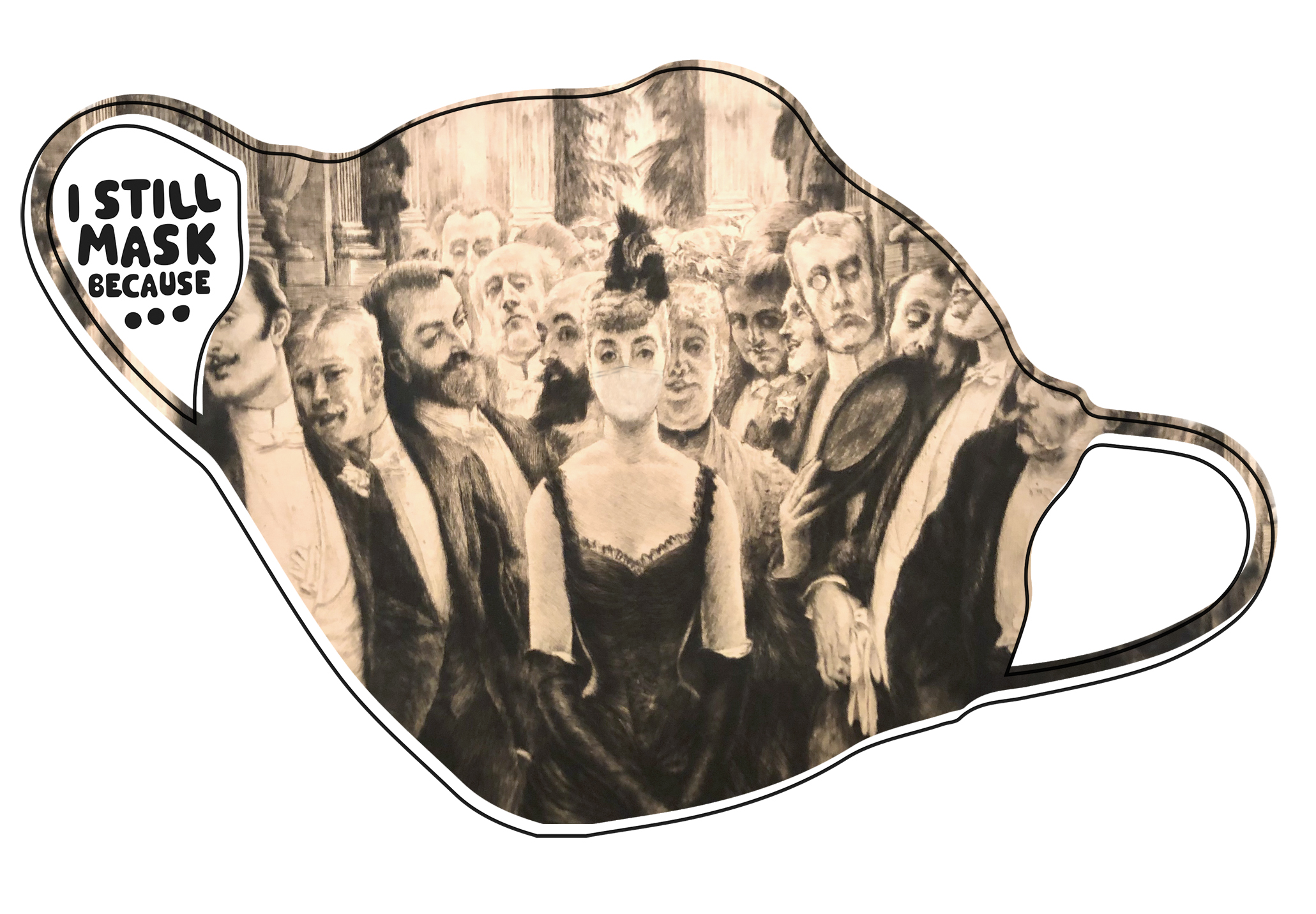
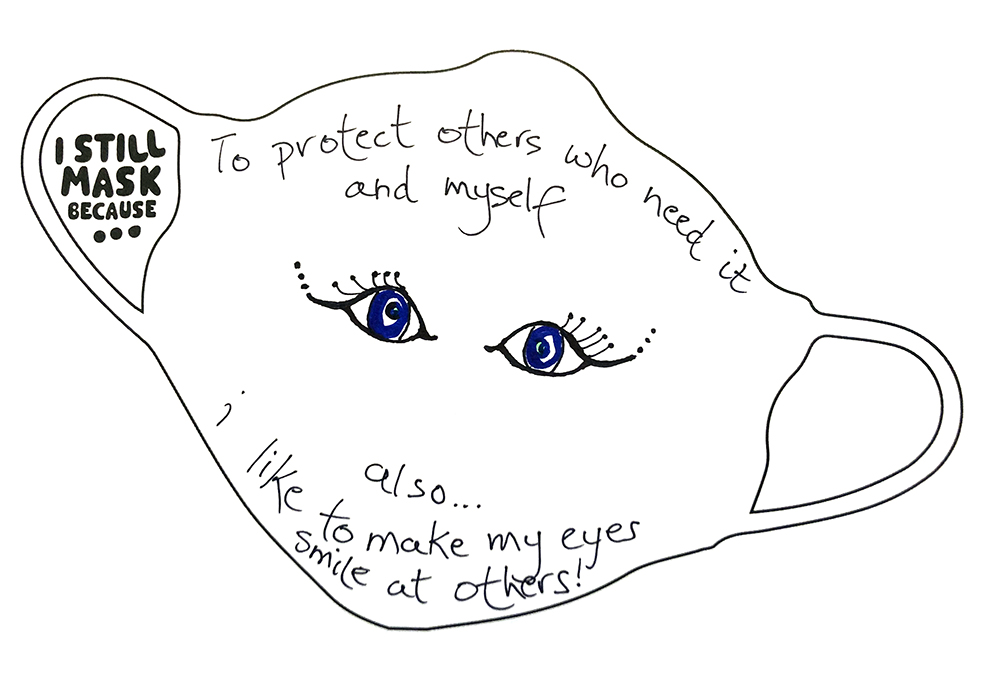
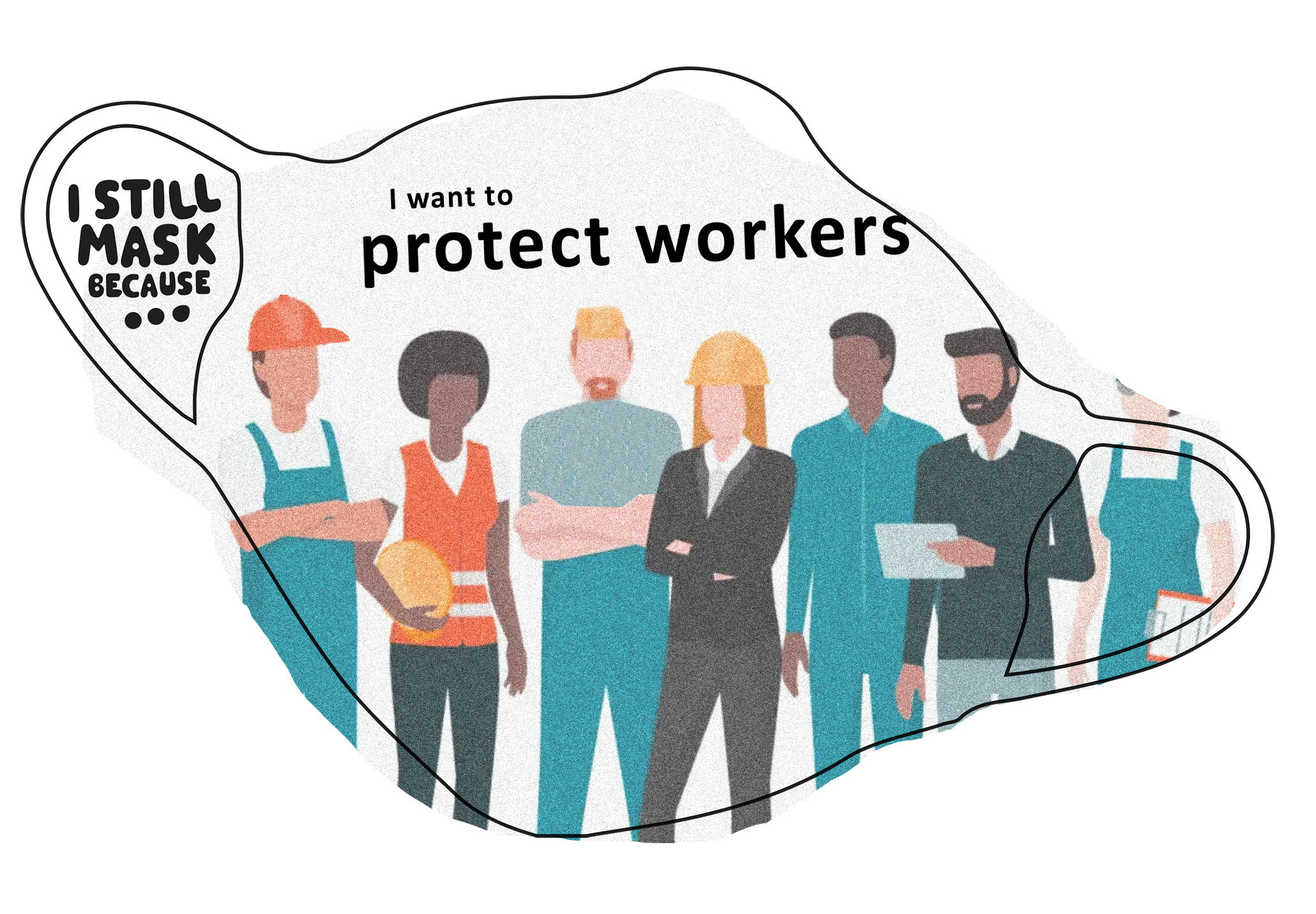
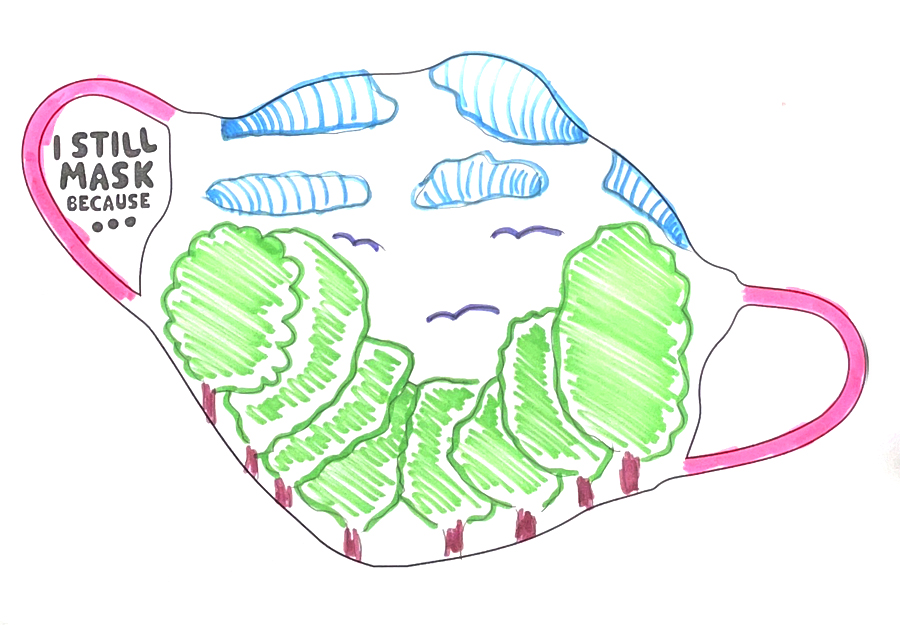
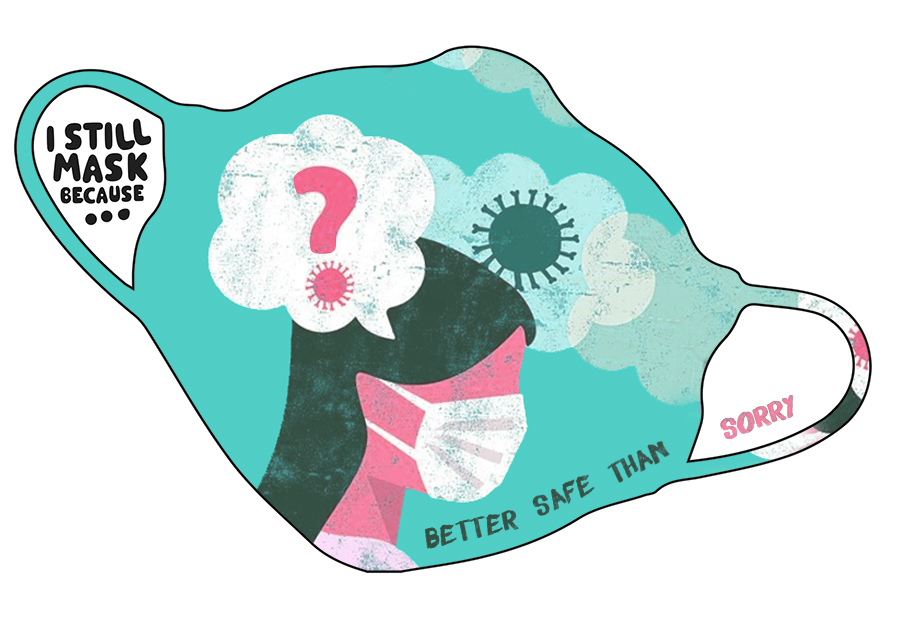
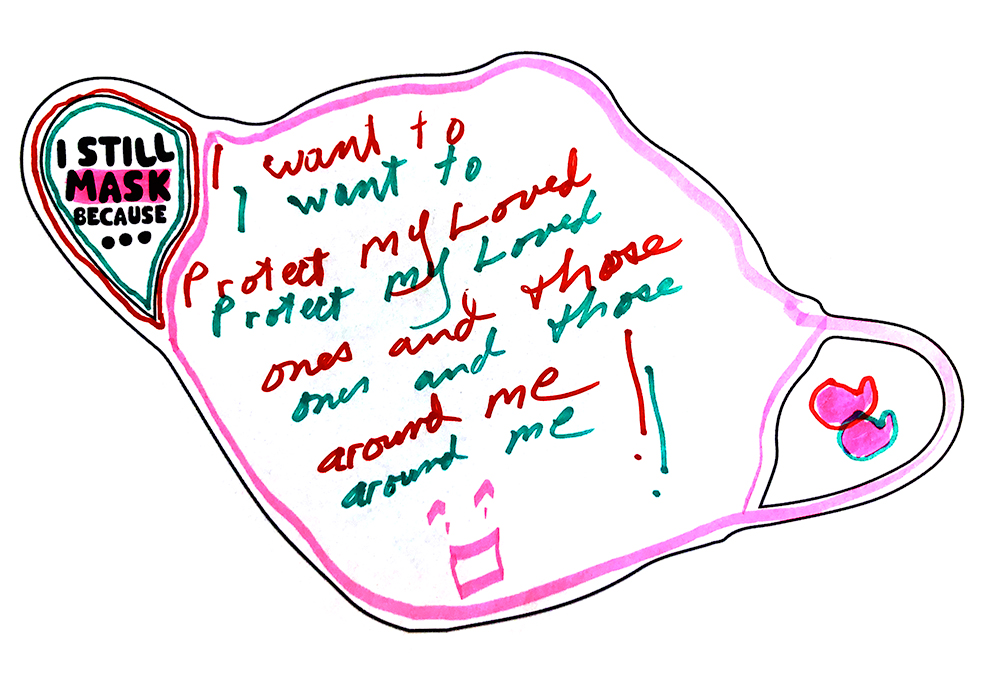
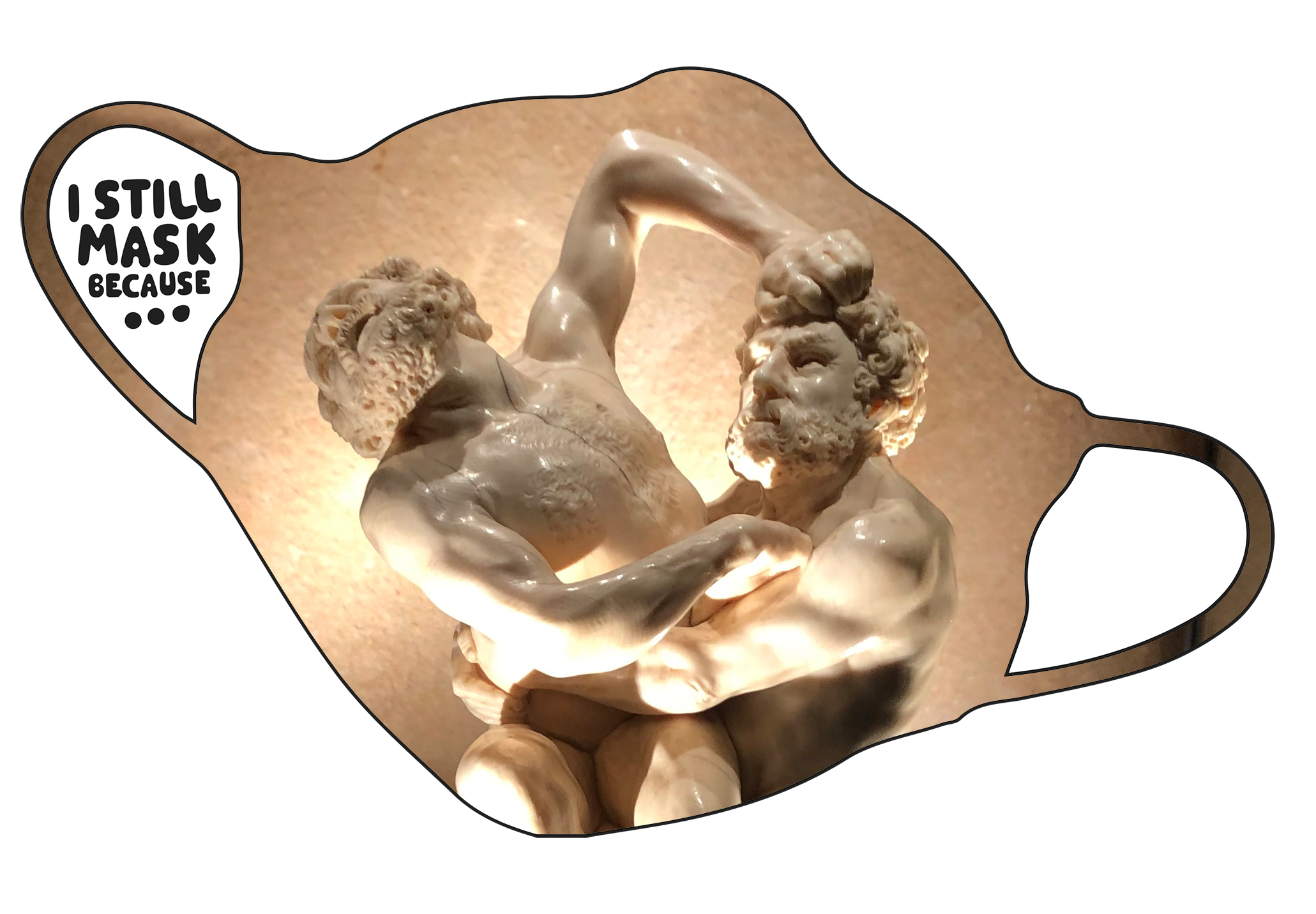
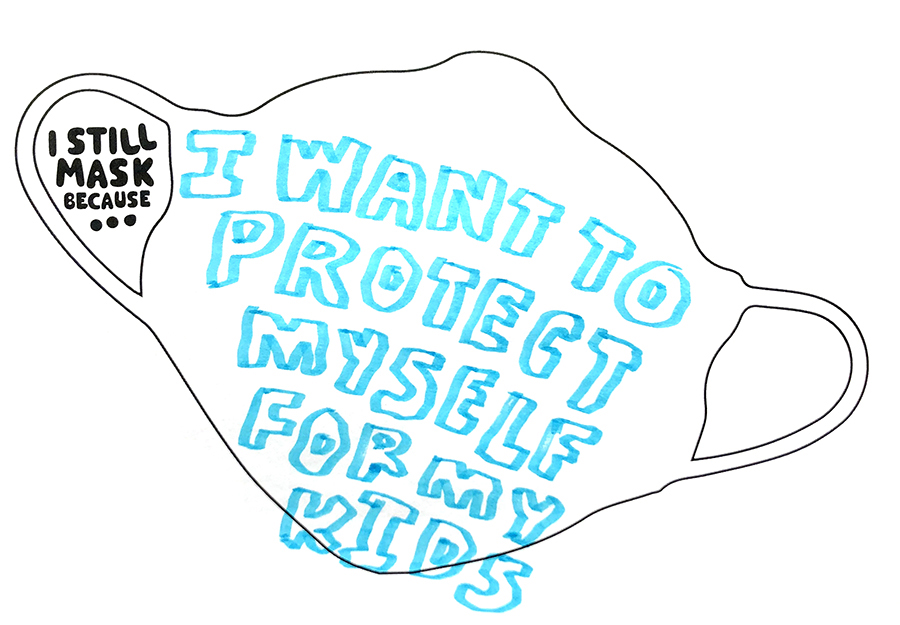
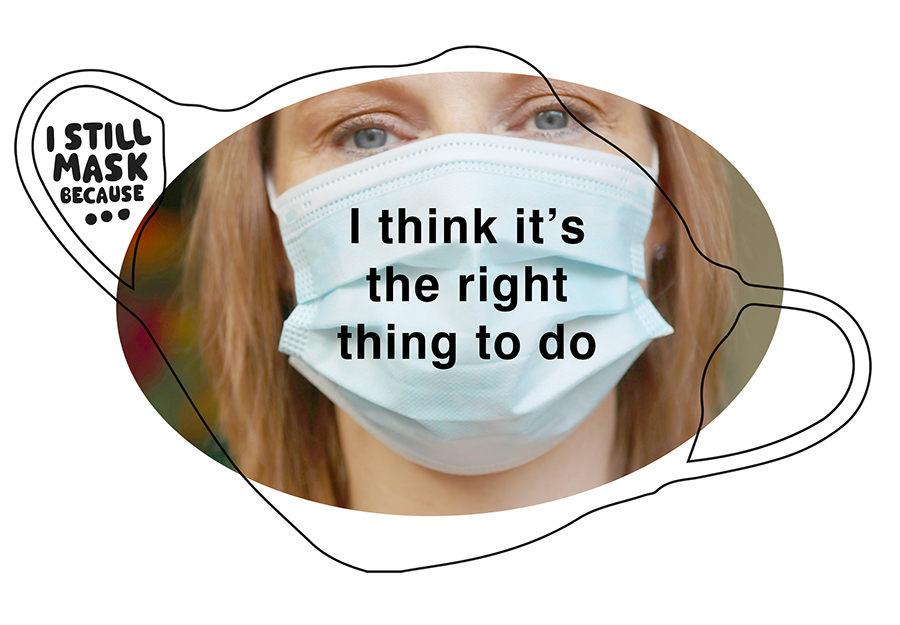
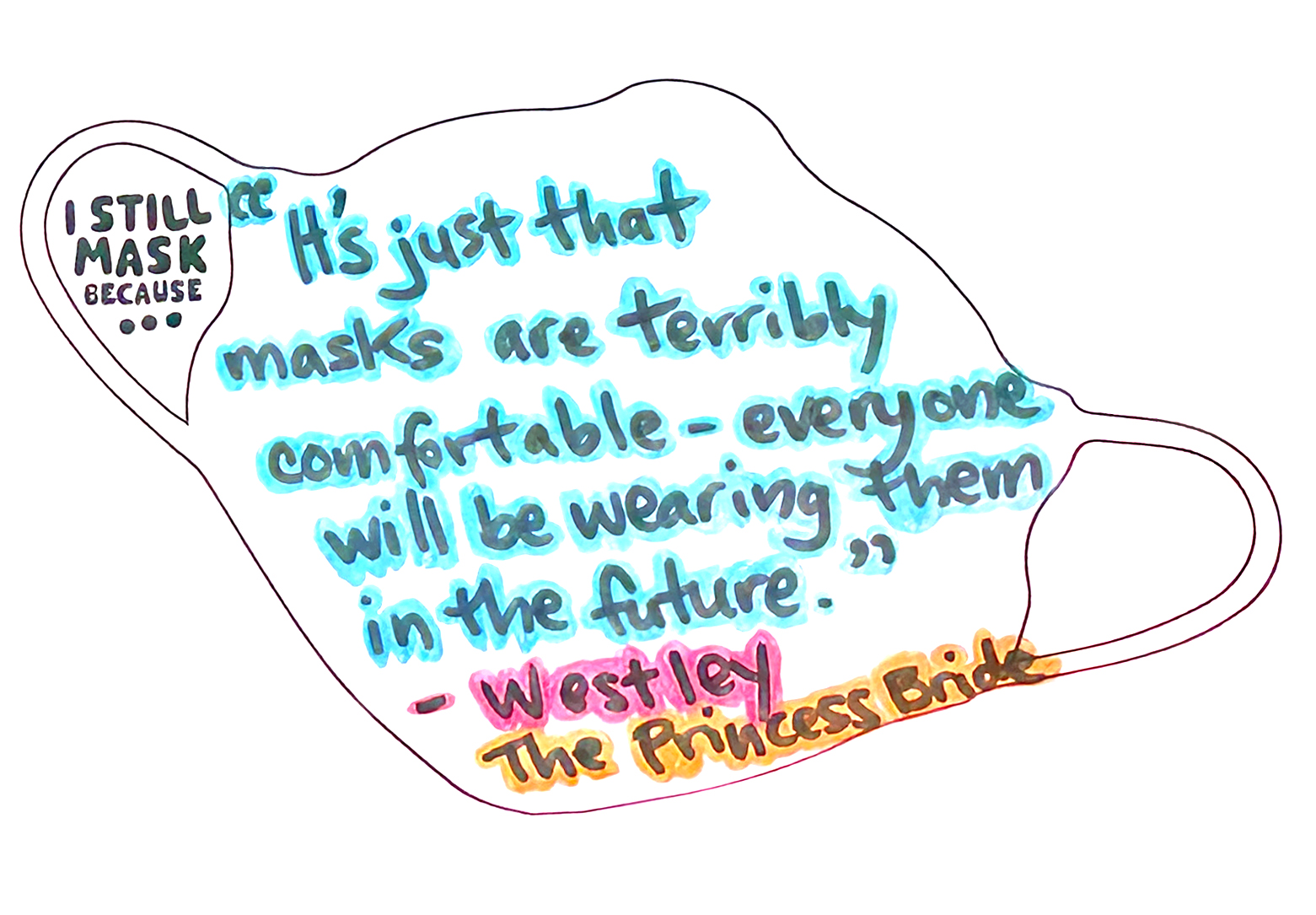
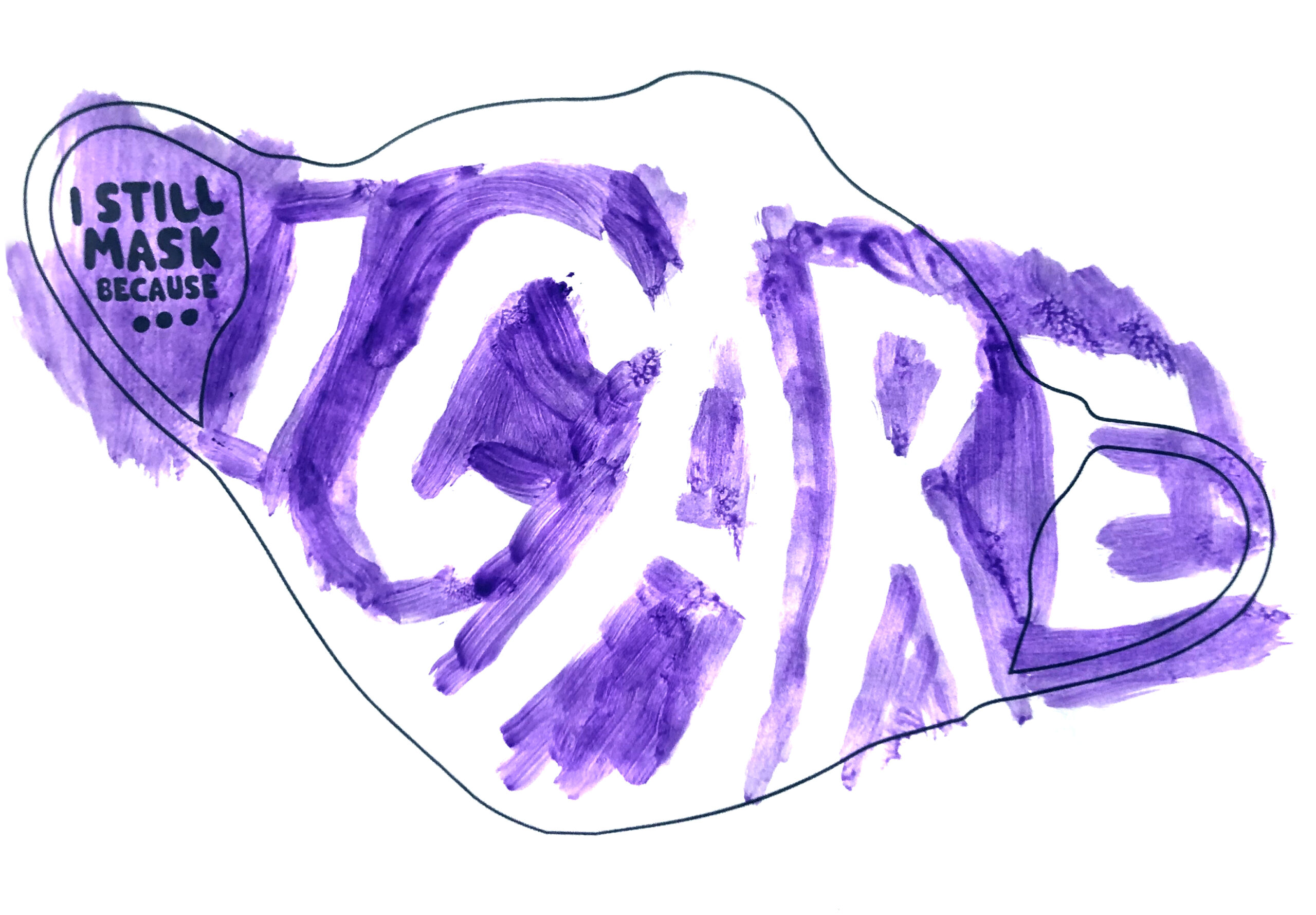
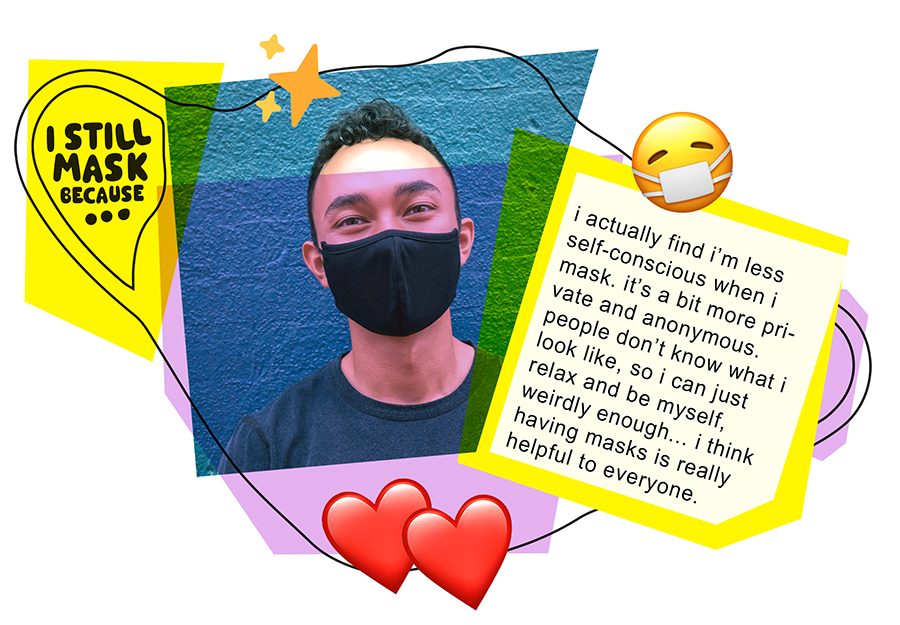
With the prompt of “I still mask because…”, we discovered different reasons people hold for masking today. Here are some of the artworks that participants submitted in support of the project:
6. Aquil’s personal reflections
Masked Mondays is a multi-media web campaign pushing cultural spaces to institute recurring mask-mandatory periods of access. The idea is to keep culture accessible to all.
For me, an important aspect of “care” is advocacy. In the same way that socialism can be “organized compassion”, advocacy can be “organized care.” While my instinct is to frame discussions of care in an interpersonal way, I thought it would be fruitful for my project to promote values of community care. I think that the systems of our lives and the rules within our control should care for us.
During the early days of the pandemic, I was acutely aware of how broader rules and regulations established a baseline of care without depending on individual decisions in an individualist society. I’m immunocompromised, and a respiratory illness could easily lead to a hospital visit (or worse). Mask mandates early on set a standard that most people were willing to oblige, even if they wouldn’t necessarily mask on their own accord.
As the years pass since the pandemic’s onset, I have appreciated that certain art galleries and cultural spaces have kept some form of mask mandates. I still mask in almost every indoor public space I visit, and so I am caring for myself by advocating for mask mandates while caring for others at the same time.
Many of my art projects focus, in some way, on social change movements. I’m pleased with this project’s emphasis on tangible impact. The goal is to concretely increase safe access to cultural spaces for disabled and non-disabled people. My art projects also tend to involve participation and crowdsourced perspectives because I believe that we learn more when we include more people at the table. Most questions have multiple answers, and most art projects are enriched by more participant voices.
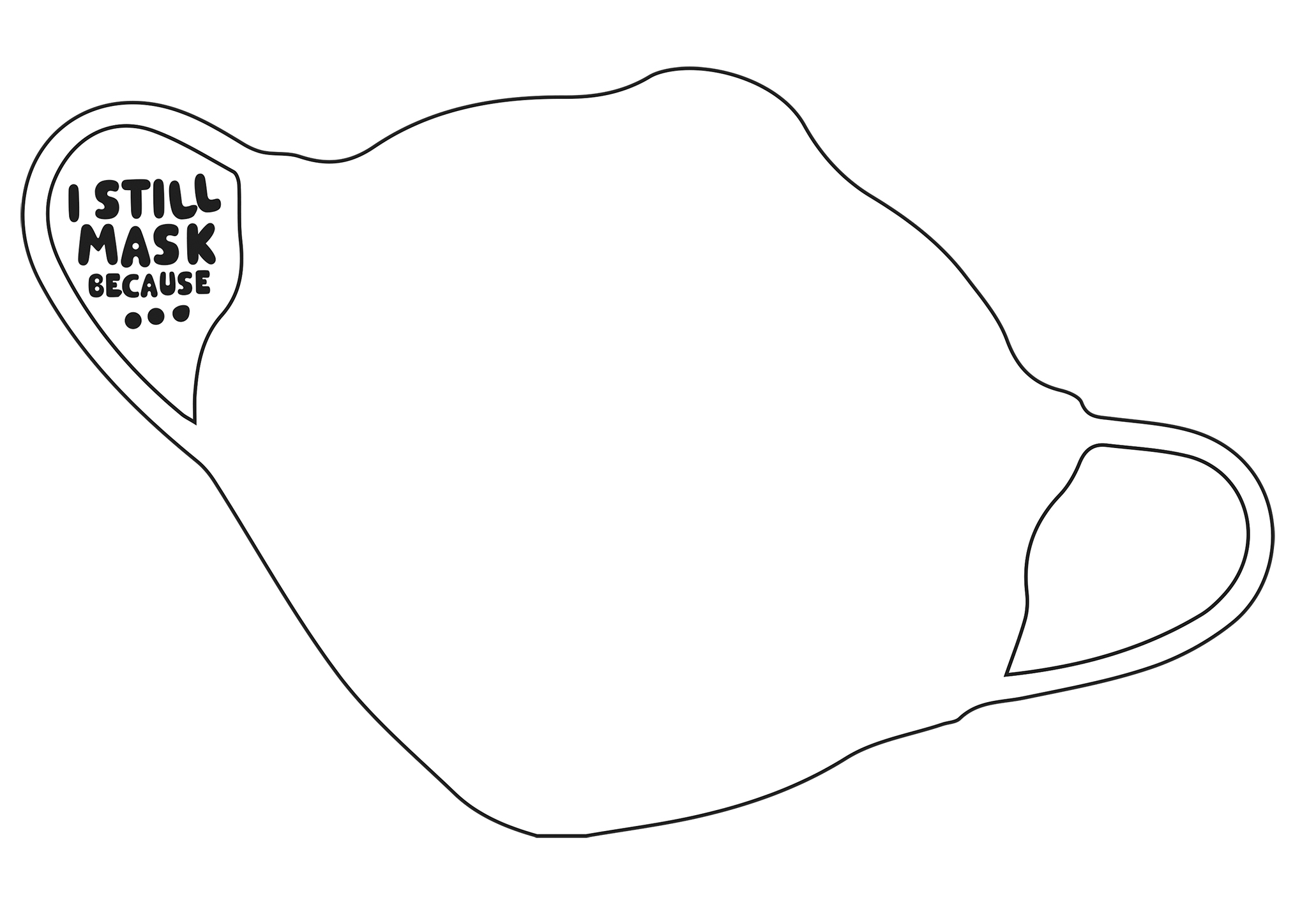
This project shares 9 specific reasons to adopt a Masked Mondays policy, acknowledging numerous lenses that support the idea. By using participatory art processes – encouraging participants to fill out the “I still mask because…” template and submit voice notes that were collaged into a video – my goal was to align this project with the community values it promotes. Masked Mondays attempts to gently push cultural institutions towards values of community care so that they might further “walk the walk” of their published missions. Masking helps us all, and recurring mask-mandatory periods help keep culture accessible to everyone.
About the creator

Aquil Virani is an award-winning visual artist and filmmaker – of Indian and French heritage – who often integrates public participation into his creative process. With support from Canada Council for the Arts, Ontario Arts Council and Toronto Arts Council, Virani has recently collaborated with Aga Khan Museum, ROM, Senate of Canada, and Canadian Museum of Immigration, among many others.
© Aquil Virani, 2025.
All artworks, images, and texts are published with the permission of the artist. The creation and publication of this work was made possible with the support of Canada Council for the Arts, Government of Canada, Ontario Arts Council, and Government of Ontario. Thank you also to the support of Tangled Arts + Disability, and Workers Arts and Heritage Centre.