

Created by
Amanda Tkaczyk,
Fellow, I Love My Gig Ontario 2025
Published
February 4, 2026
About this guide
I hope this research-creation project inspires reflection, action, and change to improve the ways we care for others, especially during crises.
Three things you can expect in this guide:
- Reimagine future of volunteering with hope & innovation
- Practical tools to discuss problems in volunteerism
- Validation and exploring paths away from burnout.
My perspective is based on over 20 years as community volunteer, deep listening to others, and academic research. I have no affiliations or interests to protect.
Optional art activities
In each of the six sections below, I share two art activities for your creative exploration and expression. I crafted these 12 activities based on the themes and expressions in this guide. I encourage you to change the formats, mediums, and activities as needed.
These are intended to be strengths-based explorations of your experiences with volunteering. I am not a mental health clinician and this is not meant as art therapy. These activities are intended to be hopeful and inspiring.
I’d love to see what you create!
Support & resources
If you require immediate mental health support, please call 9-8-8 for crises mental health support across Canada. For additional resources, please reach out to ArtsPond at hello@artspond.com.
Section 1: Why volunteerism?
Commentary and four digital collages on why volunteerism matters in the future of care during crises.
Optional art activities
1.1: What does volunteering mean to you?
Create a digital collage about volunteering
1.2: How can volunteers impact the world?
Draw an image of the power of volunteers in community
When imagining the future of care in Ontario, why should we care about Volunteerism?
My motivation is driven a from shared experiences and frustrations, such as:
- Why do we have to go to 10 different websites to learn about opportunities to volunteer in our local community?
- Why are organizations in my community closing down due to lack of volunteers, but when I go to community volunteer boards I don’t see them recruiting?
- Who gets ignored and rejected from the opportunity to offer care?
- Who is not invited to contribute?

During times of crises when individuals are desperately seeking opportunities to receive and give care, gaps in volunteerism infrastructure, operations, and practices become amplified.
Resources go to waste becasue volunteers can not be activated or meaningfully engaged in service.
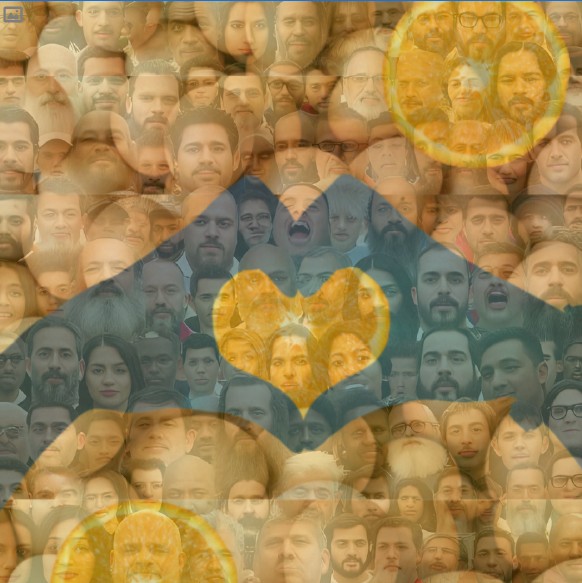
If volunteerism is transformed to a care-based approach, what could it impact?
- Better service delivery
- Reduced social isolation
- Inclusive approaches to authentic engagement
- Address ineffective, disappointing, and disrespectful volunteer experiences
- Eliminate systemic barriers in access to resources & meaningful participation in third-sector care-based activities
- Prevent closure of services in community due to “lack of volunteers”
- Address the significant gaps in NPOs and community volunteers wanting to contribute

Volunteerism as an abstraction for care. By understanding and improving the experience of volunteerism, we can elevate how we care in community:
- Shared resources
- Shared support
- Access to information
- Access to community
- Collaborative solutions
- Prosocial engagement
- Identity

Section 2: Care-based considerations
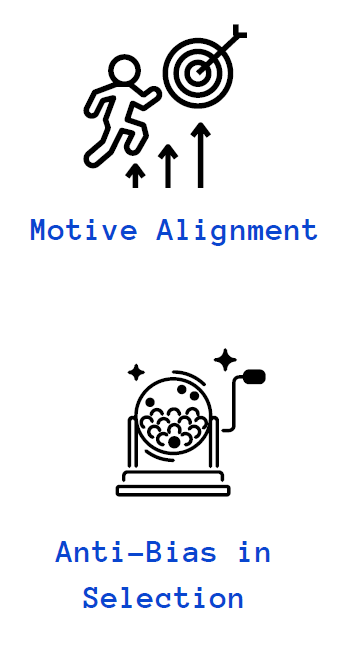
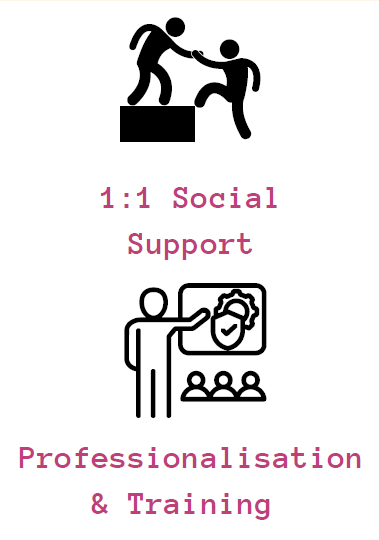
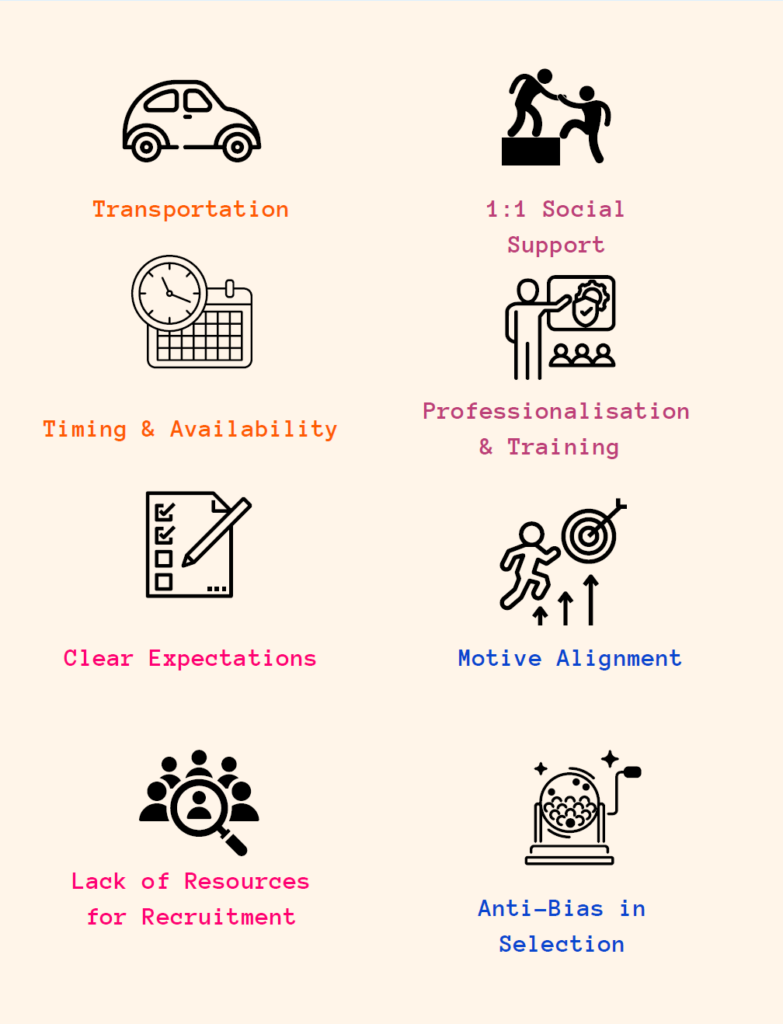
Eight approaches to embed care into volunteer recruitment and engagement paired with short poems.
Optional art activities
2.1: What does caring mean to you?
Write a short poem about a moment of care that inspires you
2.2: When you think about accessible opportunities, what does that feeling sound like?
Describe the instruments and musicality of how it feels for you.
Make It Known
How can I learn
What you do not share
How can I understand
What do you not explain
How can I do
What you do not describe
How can I find
What you hide
What is it that
You do not
Want me to find
No Other Way
The food bank closes at 4pm
It does not open on weekends
If you need food
You might need a day off of work
You might need to ask your friends
to help you again
You and the volunteers are restricted
to make it there in time for the
administrative staff
To lock the doors
To stop the service
To halt operations
Because evening accessibility
Was not a board of directors priority
Most who come
Need their own cars
They say
There is no other way
There is no funding to help those who
do not have access to gas guzzlers to
arrive safely
There is no other way
Until the organziers decide there has to be another way
Maybe tomorrow at 9am
The Guilt of Overhearing How People Who Make Decisions About Recruitment & Selection Perpetuate Harm & Exclusion Without Any Repercussions
If I speak up
They roll their eyes and ignore me
They tell me I don’t understand
They insist they know it all
If I stay
I can continue to help
Maybe if I can keep my mouth shut tight enough,
I won’t be excluded
Maybe if I can smile and nod phony
enough, I can gain their trust
Maybe one day I can be a leader
Maybe I can make a change
Maybe, maybe, maybe not
It makes me feel sick
Coach Cardy’s Way
He sat in the office late into the evening making phone calls
Making sure to reach out to each player who tried out for the team
Coach Cardy’s Way was to give everyone meaningful feedback
Those who did not make the team were told
What skills and techniques that they needed to improve
They were invited to play on the practice teams
They were told about house leagues and lunch hour open courts
He wanted each player to continue to play – that was his way
He didn’t post an annoucement with an apology
He cared for each of them
This was over twenty years ago
I was a witness who passed by as he made those calls
I’m sure as they years passed, he had to make more and more calls
I imagine if it became too much, he brought on an assistant
If it became too much again, another assistant
Uncompromising commitment to care
How can you be like Coach Cardy today?
Section 3: Sample simple scorecards
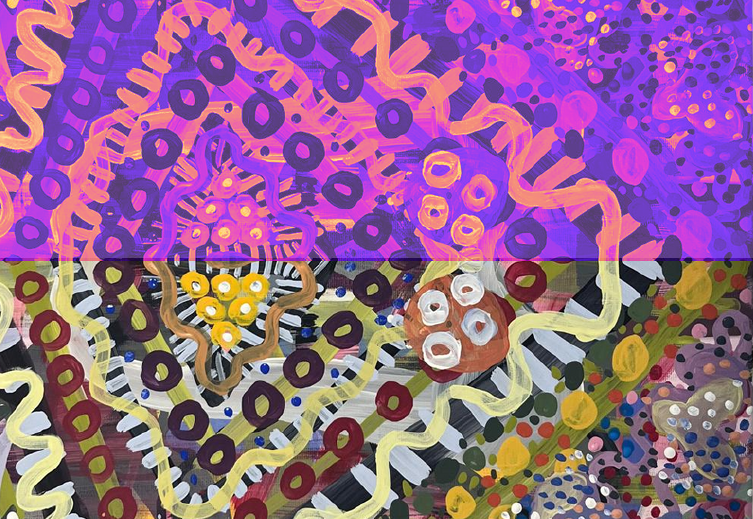
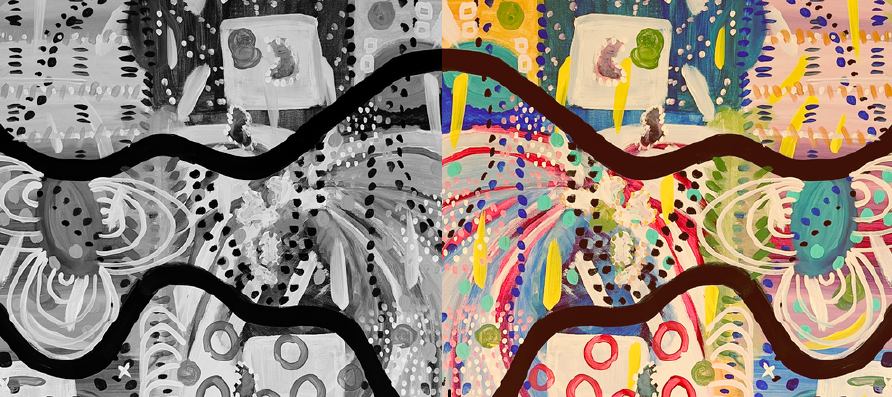
Set of three acrylic abstracts paired with thematic evaluations of volunteerism practices.
Optional art activities
3.1: Listen to a song that reminds you of the power of community and create an expressive line drawing (let your hand guide you and create what you feel without thinking of a specific object or symbol)
3.2: Draw an image that symbolizes how it feels to take care of something, what colours and shapes do you use?
Information access
Are opportunities and special tasks visible to all and distributed across multiple channels (website, social media sites, event calendars, mailing lists, community news sites, etc.)?
Clear definitions of the requirements that have been verified by multiple individuals with no competing interests?
Is information available in multiple formats (audio, visual, text) and languages?
Self-serve translation (users can easily use their preferred tools to personalize your content to meet their needs)?
Are there active offers to provide help and additional information?
Availability
Can individuals adjust the duration, timing, and ownership of their times easily?
Are schedules prepared in advance so that volunteers can organize their personal schedules?
Are their multiple affordable and/or free options for transportation?
Are we aware of the commute expenses and travel time of volunteers and working to minimize their personal expense?
Social support
How do we acknowledge and celebrate contributions in an ongoing, honest, and meaningful way?
What ways are we helping peers support one another through formal and informal programs so that trust, engagement, and asistancce is available from one another?
How are we collecting, sharing, and taking action the feedback?
If each piece of volunteer feedback required action (no excuses), are we prepared to act?
Section 4: Frictions & futures
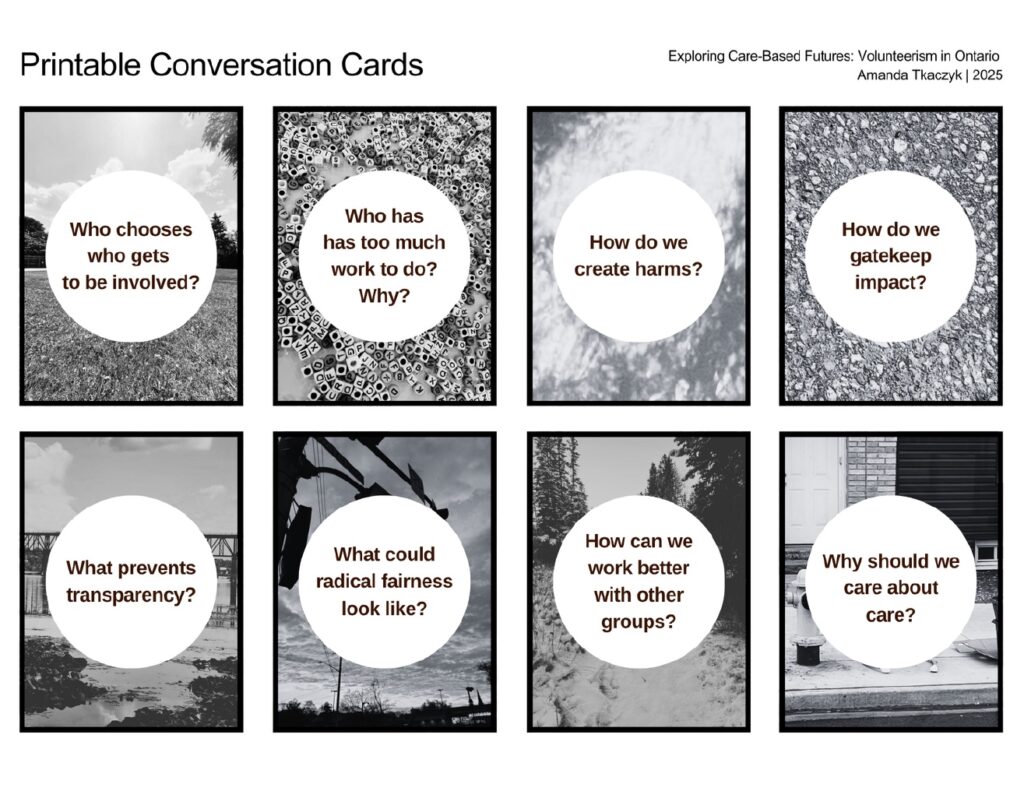
An illustrated deck of eight critical conversations starters.
Optional art activities
4.1: Take or find a photograph that makes you smile, if you think about the future of volunteering, what title would you give this photo?
4.2: Draw a sketch of what radical fairness in volunteering would look like, what colours and symbols do you use?
Design of volunteer systems rooted in care
Principles
- Transparecy:
- What if we had a clear understanding of opportunities, how they are created, and their outcomes?
- Accountability:
- What if there was care-based monitoring of unfair and harmful indicidents?
- Access:
- What if you had a single source of information with multiple formats/channels?
- Support:
- What if everyone who wants help or to offer help receives it?
- Interoperability:
- What if training/oboarding could qualify you for multiple positions/orgs?
- Integration:
- What if inter-organizational gaps are addressed by community?
Section 5: Design of collaborative human-AI roles
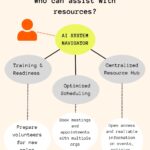
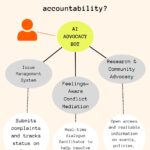
High-level speculative design of three AI tools that could help humans deliver better volunteer.
Optional art activities
5.1: Think of an important role in a care-based organization, if that role had superpowers to do more, what would that look like? Write a short poem or draw a sketch of the superpowers
5.2: Draw a big beautiful body of water that is a shared resource, if the water was technology what shared resources would beneift you and your community?
I have a Master’s degree in Artificial Intelligence. I care deeply about ethical and responsible approaches to using AI for social good. I fight against AI harms & injustice against people, animals, planet. I create ideas and art with AI to imagine what could be good and spark critique.
In this section, my goal is to share ideas about how the human work that supports our volunteer systems could be assisted with AI tools. I choose to focus on key three roles and present high-level thoughts about how AI might be used to improve delivery, services, and experiences.
Too many times in organizations, whether I was a volunteer, employee, or community member, the labyrinths of ego and politics would get in the way of meaningful organizational change for radical care. Behind closed doors I was told many times “that’s just the way it is”. This section is not techno-optimism. It is part of my resistance, where I imagine a future where there are less excuses, more access, and higher expectations of how we can help one another with meaningful, enriching, and sustainable volunteering experiences.
Section 6: Call to action
Collection of four short AI-generated audio recordings exploring the disillusioned personas of volunteers and recipients if care-based approaches are not prioritize.
Optional art activities
6.1: Draw the face of someone you love and then write a short story about how they benefit from volunteers.
6.2: Write a short song about how good it feels to do good in community with your community through volunteering.
As mentioned in Section 5, I use AI to spark conversation and for critique. I know AI causes harm, I also know it can be used for good.
Throughout this collection, I’ve shared visuals, poetry, and provocative questions. I wanted to extend the project to include an audio component.I curated four personas and fictional narratives about what could happen if we do not adopt care-based approaches to volunteerism. This is a small sample of ideas and possible outcomes meant to facilitate dialogue and inspire real action for care-based approaches in volunteerism.
AI-generated audio is used to make the fictional storytelling more vivid and also raise questions of why some voices are listened to more deeply than others. Each persona has two different audio clips so that you can reflect on which voices warrant more empathy and concern for you, why? As an activity, I suggest you and peers listen to both and discuss what influences your experience.
1. Burnt out experienced volunteer
I received my annual « Volunteer of the Year » certificate in a generic email again. After all these years, it feels so empty. I see new, enthusiastic people get ignored or turned away because of cliques and unspoken rules. I’ve tried to bring it up, but I’m just told « that’s just the way it is ».
I have skills in logistics and scheduling that could really help, but leadership only ever asks me to do the same data entry task I’ve done since 2025. There’s no room for growth or using my real talents, and no one ever asks for feedback on how to make things better. I’m just a pair of hands, not a person with ideas.
Audio 1A
Audio 1B
2. Eager but rejected new volunteer
I overheard two of the senior volunteers talking about how they « don’t have time » to train new people. It was so discouraging. I have the time and energy to help, but it feels like there are gatekeepers at every turn who aren’t willing to give anyone new a chance.
I finally got an interview for a mentorship role. The person interviewing me seemed completely uninterested and gave me no real information about what was expected. A week later, I got a one-line email saying I wasn’t a fit, with no feedback on what skills I could improve or other ways to get involved. It felt like they already knew who they were going to pick.
Audio 2A
Audio 2B
3. Forgotten recipient
Every time I go to the community centre for a program, there’s a different volunteer at the desk who has no idea what’s going on. The information is never the same, and I get sent from person to person. It makes me feel like a burden and that my needs aren’t important enough for them to be organized.
The local ride program for seniors is my only way to get to doctor’s appointments, but the schedule is always full. I know there are people in my neighbourhood who would love to help drive, but the organization’s sign-up process is so complicated that no one new ever joins. So, I miss appointments because of a « lack of volunteers » that doesn’t feel real.
Audio 3A
Audio 3B
4. Overwhelmed coordinator
We desperately need volunteers for our evening programs, but the board insists we can’t afford to keep the lights on past 6 pm. I’m caught between the community’s needs and a leadership team that perpetuates the very barriers we’re supposed to be solving.
Another local organization just launched a program that’s almost identical to ours. We’re now competing for the same volunteers and grants because there’s no system for us to collaborate or share resources. We could do so much more for the community if we just worked together, but instead, we’re stuck in our own silos.
Audio 4A
Audio 4B
About the creator

Amanda Tkaczyk is an interdisciplinary artist that combines abstract acrylics, dreamy digital art, accessible poetry, and creativity technology to explore themes of loss, belonging, grief, and spontaneity. She is an Expressive Arts Practitioner with the Ontario Expressive Arts Therapy Association.
© Amanda Tkaczyk, 2025.
All texts, recordings, and artworks are published with the permission of the artist. The creation and publication of this work was made possible with the support of Canada Council for the Arts, Government of Canada, Ontario Arts Council, and Government of Ontario.