


We’re delighted to share the final projects from the 9 Fellows in Caring Cultures 2025. Each Fellow reflected on their personal stories from a world in crisis and explored ways creative young people can guide positive social change and deepen access to care in the future.
Our thanks to the Care Team for their vital support. We also thank the Canada Council for the Arts, Government of Canada, Ontario Arts Council, and Government of Ontario for their generous funding.
For a more detailed counterpoint, read our Founder’s reflection at the bottom of this page.

From Group Chat to Collective Chats
By Maddie Bautista
February 6, 2026
Group chats can become small, caring communities where friends support each other with honesty, rituals, and everyday check-ins. With intention and trust, these simple digital spaces can grow into powerful cultures of care.
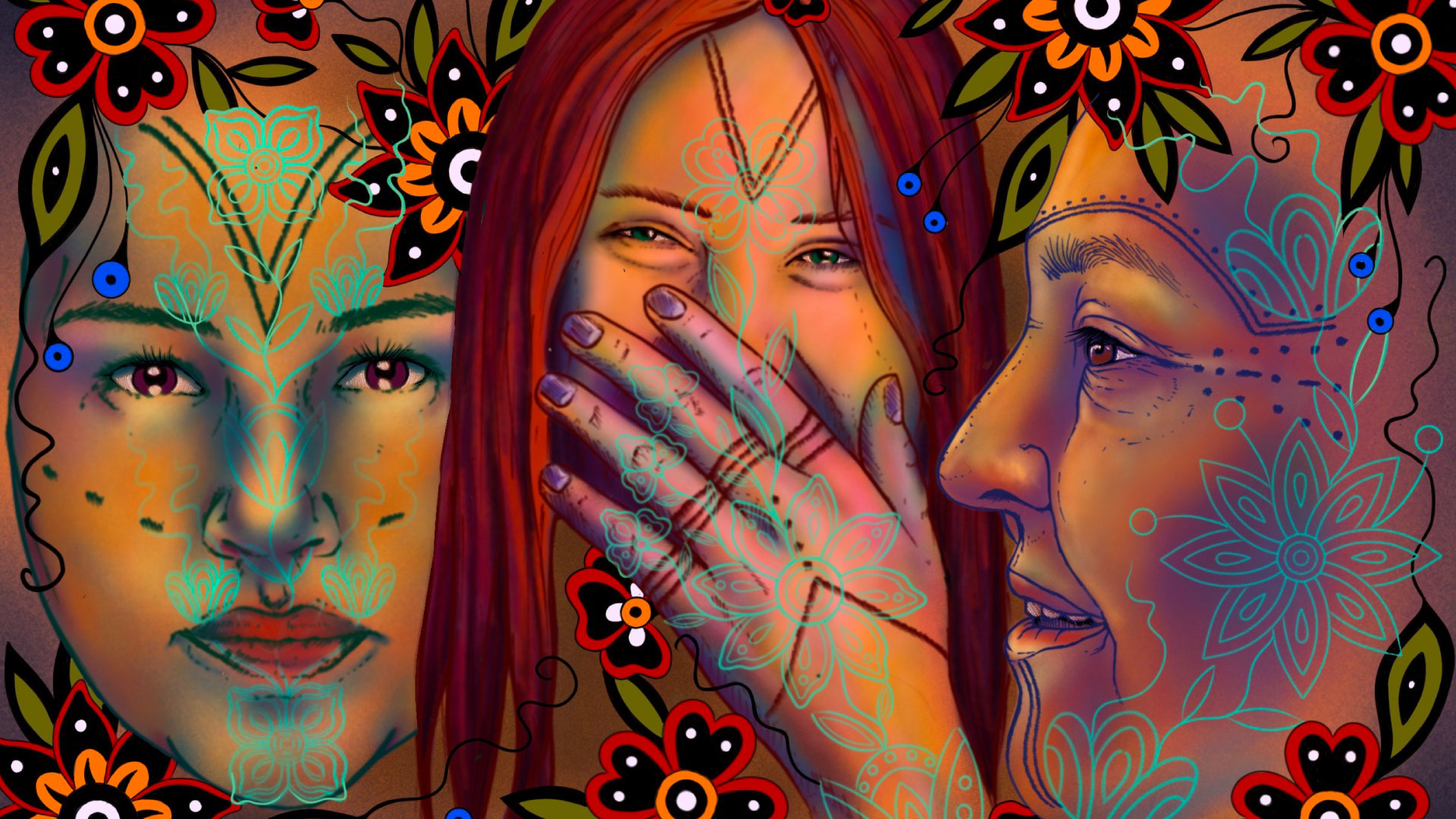
Marking Our Way Back Home
By Ameena Buchanan
February 6, 2026
Exploring Indigenous care, identity, and cultural revival, blending traditional tattooing, symbolism, and intergenerational stories to highlight healing, joy, and shared sense of belonging.
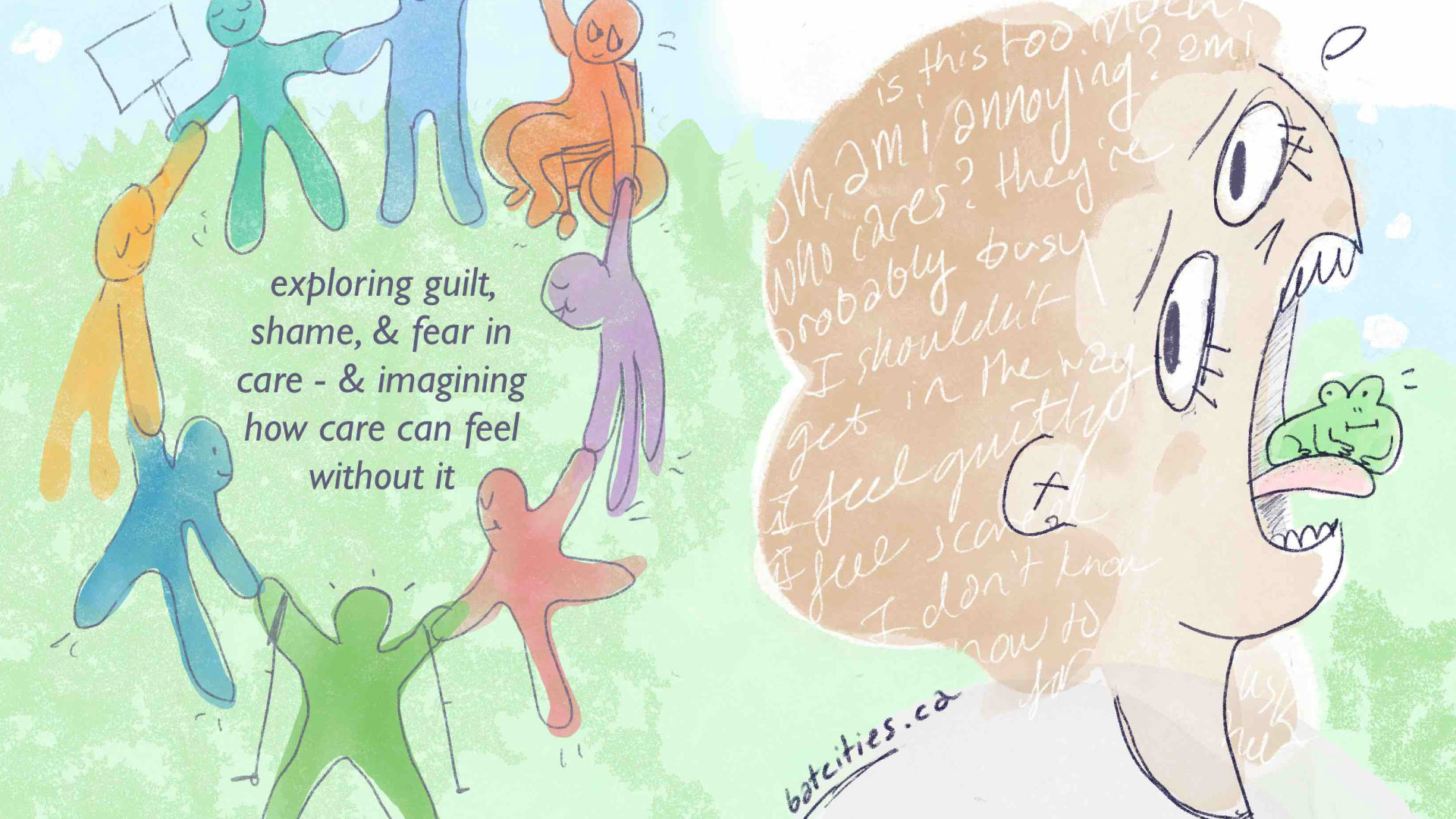
Frog in the Throat
By Kento Cady
February 6, 2026
A personal reflection on guilt, vulnerability, and learning to accept care, exploring how community, reciprocity, and more open, inclusive systems of care can shape a future where everyone can thrive.

Crossed Borders
By Miha Isik
February 6, 2026
An exploration of migration, memory, and radical care through music and poetry, offering a quiet reflection on how love travels with us and shapes the futures we imagine.
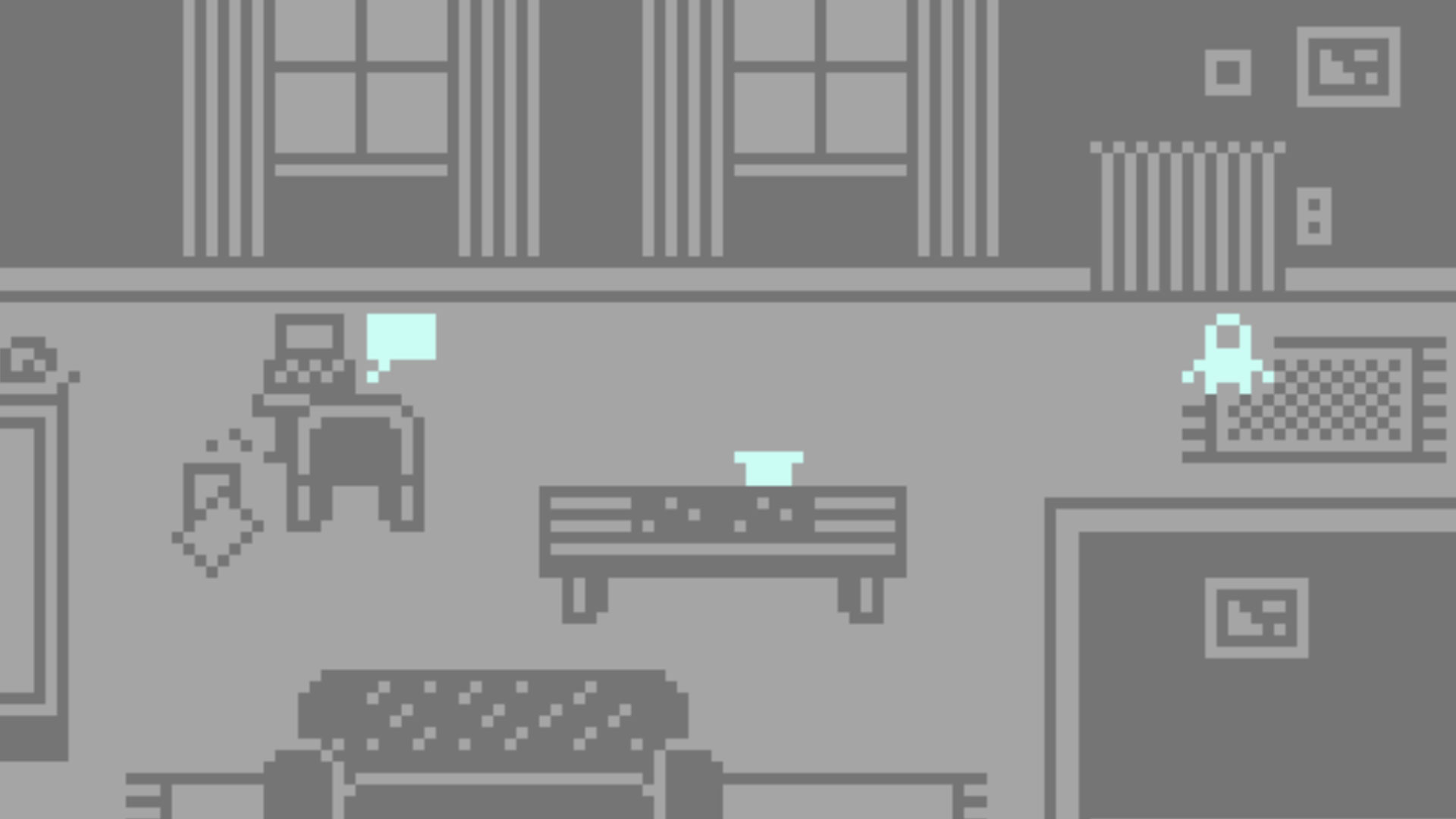
Community Calamity
By Kemi King, et. al.
February 6, 2026

The Healing Blueprint
By Kween
February 6, 2026
An exploration of healing on your own terms, offering gentle practices, reflection tools, and embodied care rituals that support rest, resilience, and the reclamation of your voice, story, and wellbeing.
The Lichen Praxis
By Melisse Watson, RPN
February 6, 2026
A living archive and call to action, identifying wounds, remedies, and practical guidance for building healthier, atypical communities that resist exploitation and revalue care.
Founder’s reflections
A space to arrive as we are
This fellowship was founded with the dream of supporting young people in shaping their own creative visions of care for a changing world.
They arrived carrying stories of burnout, change, grief, joy, parenting, chronic illness, and the emotional weather of a world that has not let up. Early in the journey, someone shared, “I’m arriving tired but ready to be here,” and many nodded because it felt familiar. These openings taught us that caring futures cannot be imagined from a place of pretending. They must begin with the real conditions people are living through.
Because of this honesty, the fellowship became its own kind of shelter. Grounding practices, slow breathing, and simple rituals led by the Care Doulas helped people settle enough to think, share, and create. Someone said that this time together was “a place to catch a breath,” which captured what the journey became. It was not perfect, but it held people. In today’s climate, that matters.
Care and crisis are intertwined
The Fellows made it clear that crisis is not a separate event that interrupts life. For many, it is the context of everyday life. Stories touched on racial injustice, disability, displacement, healthcare harm, climate pressure, and the ongoing realities of COVID. One person explained that naming certain crises can feel like a luxury when “survival mode is still happening.” This helped us understand that caring futures must be designed for a world where overlapping crises are constant, not occasional.
In this environment, care showed up as work, as labour, and sometimes as survival. Fellows called for care that refuses to dehumanize, care that respects limits, and care that understands people’s capacity shifts from day to day. They reminded us that planning for future care cannot rely on urgency or productivity. It must rely on steadiness, clarity, and the ability to adapt.
A generous body of creative work
The Fellows produced a wide range of creative work that spoke honestly to their lived experiences. Across the cohorot, they created 29,000+ words, 22 images, 3 minutes of video and audio, and 1 videogame. The work included zines, drawings, poems, small toolkits, reflective essays, hybrid song-poems, and practice-based pieces that mixed dance, land connection, or somatic methods. Many people said the creative process felt slower or more fragile than usual, but also more truthful. For some, the work became a way to make sense of daily overwhelm or to hold sensations and memories that were hard to describe in ordinary language.
What stood out was how deeply grounded these projects were in lived experience. Fellows wrote from small apartments, group chats, land trails, refugee journeys, parenting routines, and care-worker realities. Some Fellows described discovering new parts of themselves through the creative process. Others said it was the first time they felt permission to create something honest without pressure to polish or perform. This created a collective body of work that felt tender, local, and real, shaped by the world as it is rather than how we wish it to be.
A cohort shaped by many lived realities
The cohort represented a mix of identities and conditions that shaped every conversation. Fellows included Racialized, Indigenous, Disabled, chronically ill, neurodivergent, immigrant, queer, and trans youth living in suburban and rural communities around the GTHA. Their hometowns included Hamilton, Oakville, Guelph, Brampton, Toronto, and Newmarket–East Gwillimbury. Many were navigating low income, precarious labour, caregiving responsibilities, chronic pain, trauma, or complex family realities. Several joined sessions from healthcare workplaces, or homes under strain from global conflict. This made the space feel both vulnerable and necessary.
Land, body, and culture as places of return
Many reflections returned to the body, the land, and cultural memory as grounding forces. Fellows spoke about the need to reconnect with land, especially for communities whose connection has been disrupted. One person noted that this reconnection is not always easy or comfortable, but it is necessary. Others shared how somatic practices, dance, or simple breath helped them feel anchored again.
Culture also emerged as care. Whether through tattoo revival, personal ritual, or ancestral stories, people expressed how cultural practice helps them navigate crisis and claim belonging. These stories emphasized that care is not only about meeting needs. It is also about identity, inheritance, and the right to feel at home in one’s body and community.
Everyday systems of support
A powerful insight across the fellowship was the value of everyday relationships. People named that group chats, neighborhoods, coworkers, and chosen family often provided more reliable support than formal systems. One Fellow described digital group chats as “small places that hold us together,” pointing to how these virtual spaces helped maintain connection across distance, time zones, and exhaustion.
Participants also emphasized the need for clear and reliable communication systems. Consistent updates, predictable access practices, and transparent expectations were described as forms of care. These insights suggest that building caring futures requires more than empathy. It requires simple systems that help people stay oriented and connected.
Boundaries, reciprocity, and shared responsibility
Throughout the fellowship, many Fellows talked about the weight of being relied on for care. Some described feeling stretched thin or becoming the unofficial supporter in their community. Others spoke about guilt when asking for help. One Fellow said they feel that guilt “in their throat,” a physical reminder of how hard asking for care can be.
These reflections made one thing clear: care must be shared. Fellows named the need for boundaries that protect wellbeing and for practices that distribute care across a community rather than concentrating it on a few. They encouraged us to see care as a collaborative process, shaped by consent and mutual understanding.
Slowness, pacing, and the right to change direction
Another theme that appeared again and again was the importance of slowness. People described how life transitions, illness, caregiving, and work all affected their pace. One Fellow noted that things “take more time now,” and that accepting this shift was part of their personal growth. The fellowship met this by welcoming process instead of demanding perfection.
Fellows were also encouraged to pivot when needed. Projects shifted form, intention, and scale as people learned, rested, or faced competing demands. This flexibility supported creativity rather than restricting it. It also modeled a future of care where change is not viewed as failure but as responsiveness.
Story as a form of care
While the original plan hoped for more direct policy or systems suggestions, what emerged was something different but deeply meaningful. Fellows shared stories that helped explain what care feels like, where it succeeds, and where it breaks down. These stories offered texture and honesty that formal recommendations sometimes miss.
Through personal experience, the Fellows surfaced insights about housing insecurity, healthcare gaps, social isolation, gendered care labour, and the emotional impact of constant crisis. Their stories ask us to design care that respects complexity, values lived experience, and responds to people in real time.
Moving forward with what we have learned
The Fellows offered many seeds to a caring future. They taught us that caring futures grow from small networks, from steady communication, from cultural grounding, from boundaries, from consent, and from the courage to ask for help. They showed us that care is personal and structural at the same time, and that youth-led visions often begin with the immediate worlds they can touch.
As we look ahead, I hold one comment close: “We can take turns getting what we need.” That simple idea captures the heart of what Caring Cultures made visible. Care is something we build by taking turns. Leadership is something we share. And social change is something we grow through patience, clarity, and attention to one another’s humanity.
If you are curious for more information, here are two resources that should help draw a more complete picture of what we had set out to do and how we arrived here. They include our original Open Call to the community and Welcome Guide to participants.
For further reading, take a look at 13 inspiring works from I Love My Gig Ontario 2025, a fellowship on the future of post-pandemic mutual aid and community care.