

Created by
Affrica Spence,
Fellow, I Love My Gig Ontario 2025
Published
February 17, 2026
Introduction
If I’m honest, I struggled with this project more than I expected. Not because I didn’t care — quite the opposite. It’s because I cared so deeply, and because sometimes when you’ve walked through fire, even speaking on your healing can feel like too much.
For my fellowship with ArtsPond, I knew I wanted to do something that reflected not only my creative voice, but also my lived experience as a Black disabled woman who continues to navigate mental health recovery. But figuring out exactly what “care” looked like — for myself, and for others — was a challenge. I’ve gotten so used to pouring myself into projects that I sometimes forget to check in with my own well-being.
Then I had a moment of clarity. It came just after a poetry performance I gave at CAMH this year, where I still receive outpatient care. Standing in that room, sharing my story, and looking out at the faces of others — some peers, some staff, some just folks who showed up for someone they love — I remembered how important it is just to be seen.
That moment unlocked something in me. I thought about the darker days of my journey, especially my last hospitalization in 2011. I was in the thick of a severe depressive episode. Dreaming of a future felt like a stretch, let alone believing I could be part of someone else’s recovery journey. But during that time, I clung to small moments. A kind nurse. A fellow patient further along in their journey. A poem. A look. A nod. These were the things that reminded me that I was still human, still worthy of love, still capable of getting through. When I think of my mental break and those who were caught in upticks of mental health crises during COVID-19, I could reflect that I wanted my project to not only serve as art but to serve as a tool.
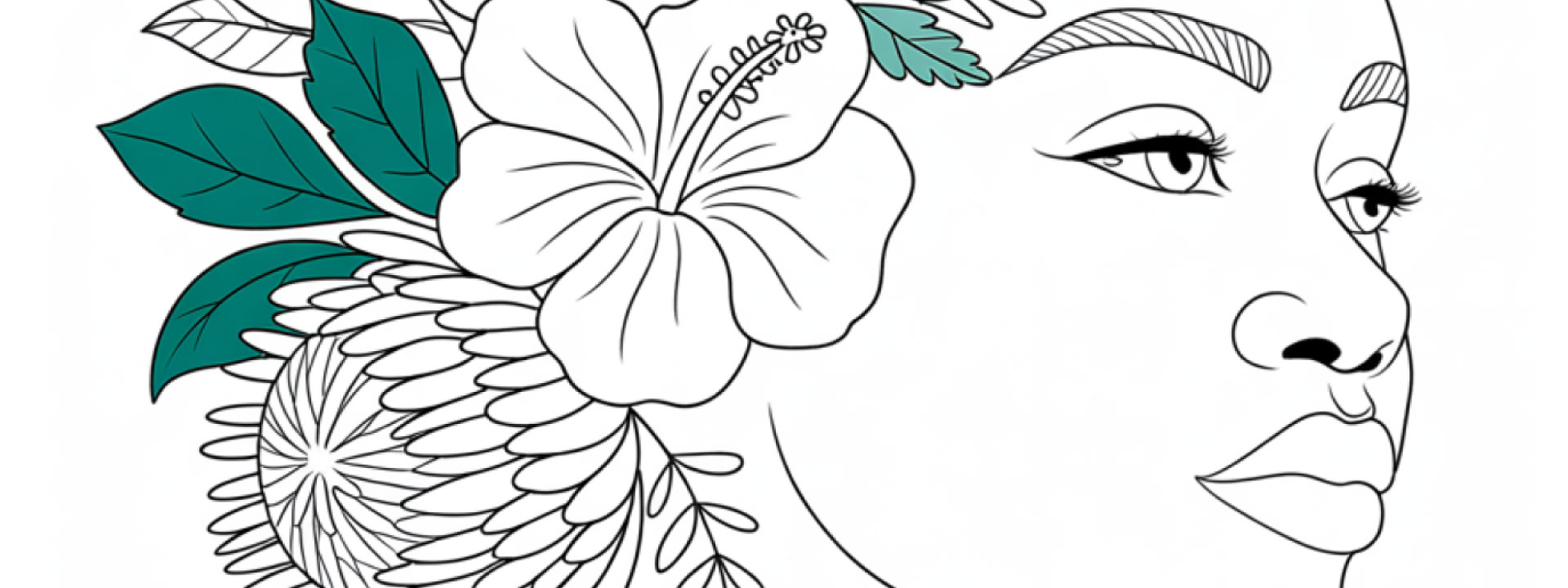
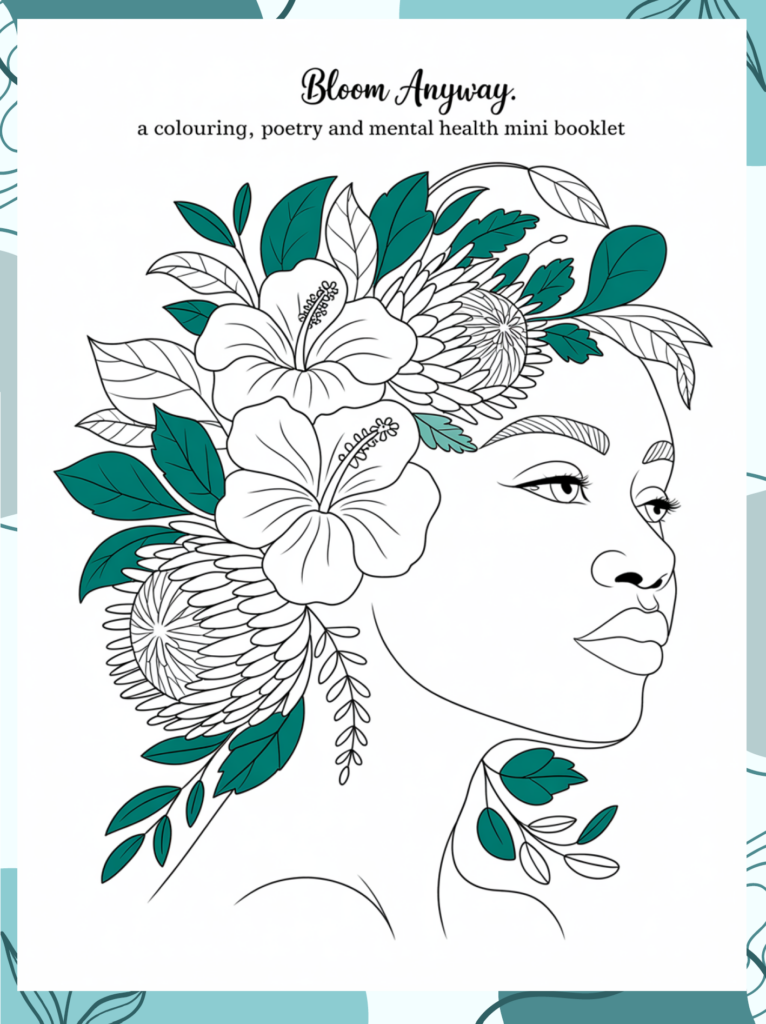
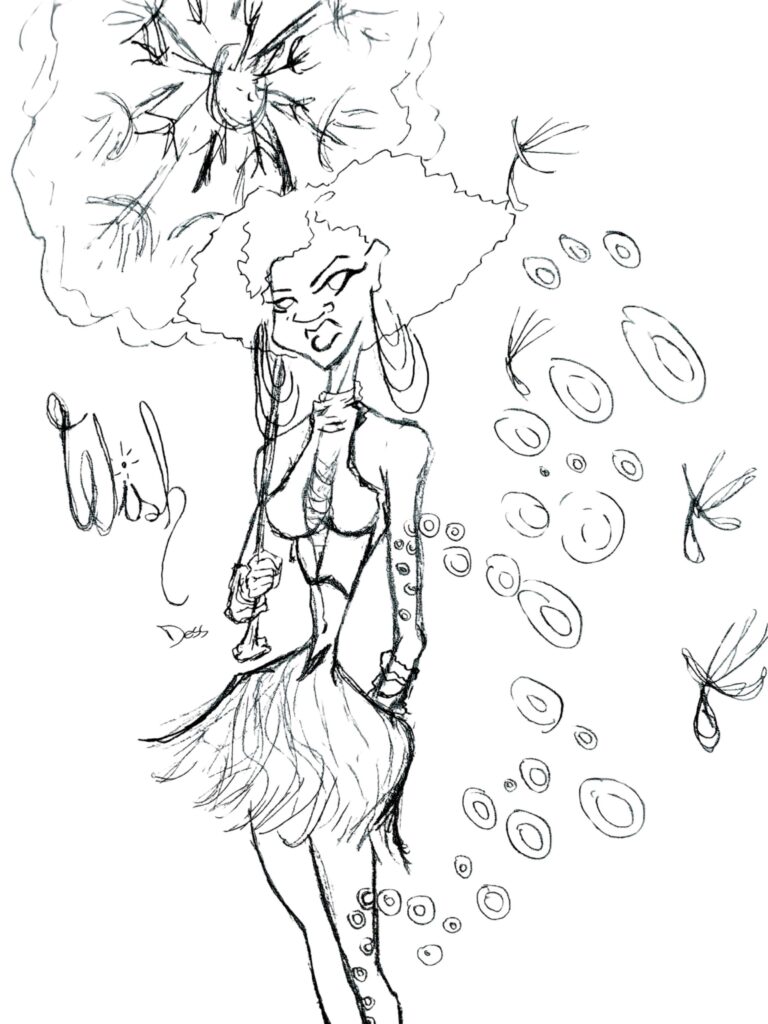
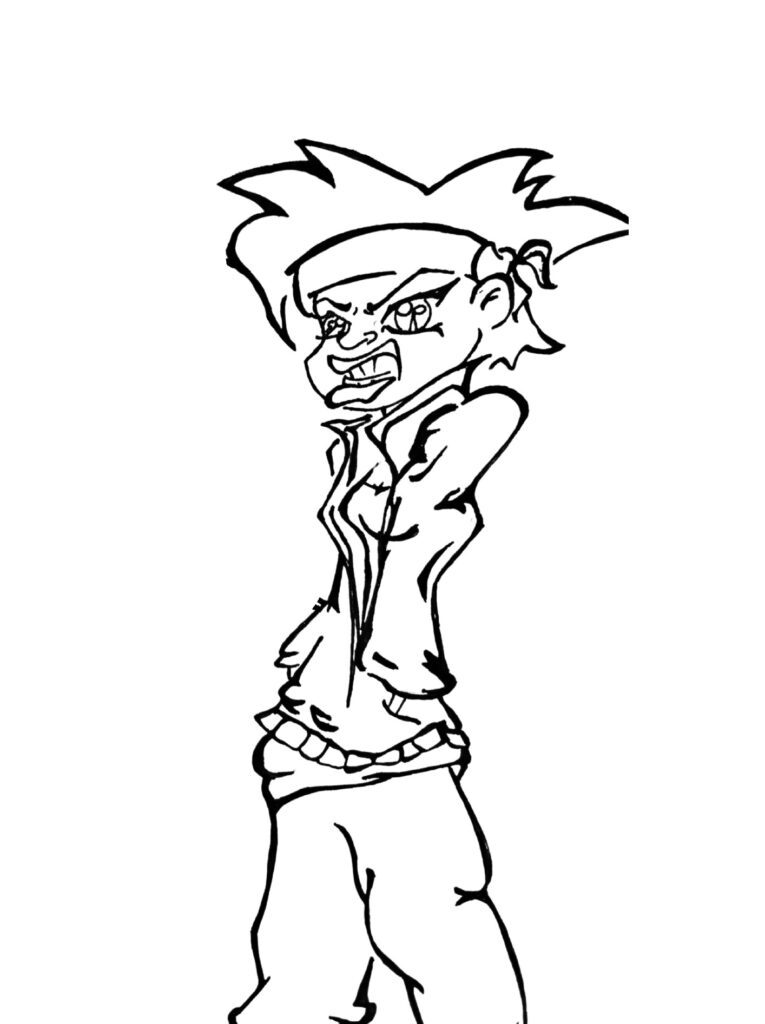
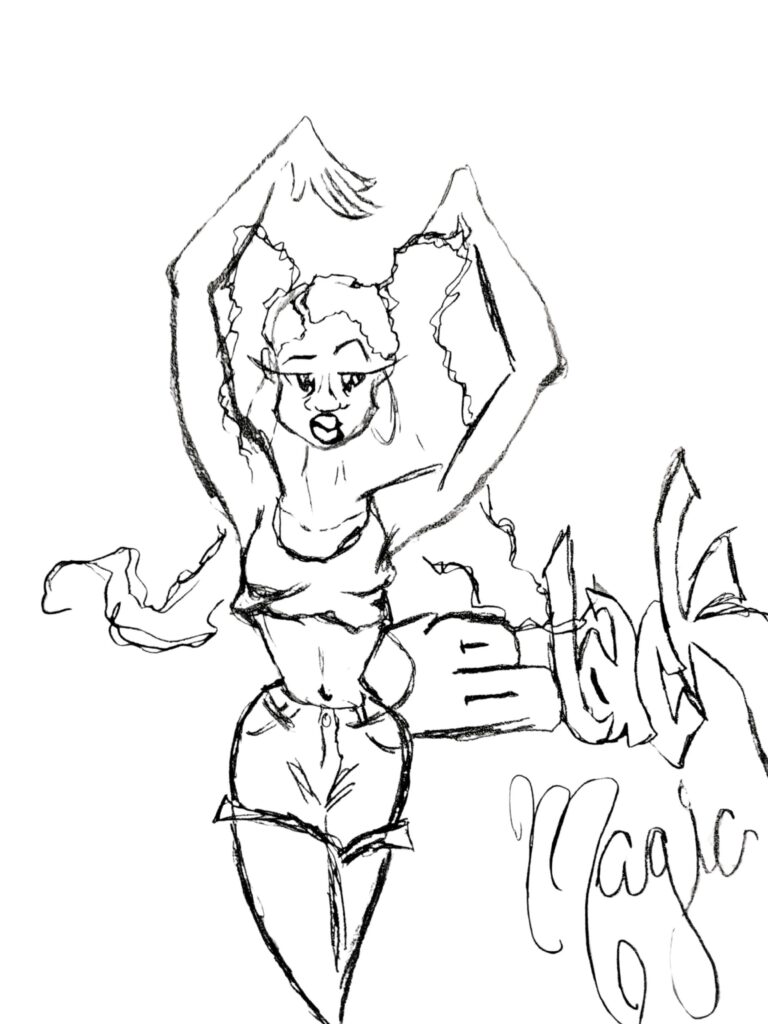
That’s where BLOOM ANYWAY began: a mini mental health booklet with bits of poetry, colouring pages, and an overall gentle reminder. It’s a soft offering, created with Black women in mind. The illustrations throughout reflect where I see myself most — the rounded noses, full lips, and kinky curls that remind me of my cousins, my friends, and my reflection. Some of the images are straight-forward portraits; others are more abstract, more dreamy. But all of them are rooted in love and intention.
I created the art by hand. It’s not “perfect,” but neither is recovery. And maybe that’s part of the point. I wanted this little book to feel like a conversation, not a lecture. Like sitting on your bed in a quiet moment, flipping through something made for you. The poetry inside reflects pieces of my own story and things I’ve witnessed in others. There are also mental health facts — ones I found while doing a little research into the state of Black mental health in Canada.
What struck me most is how under-discussed this topic still is. In our communities, we’ve often been taught to tough it out, pray it away, or deny it altogether. And while spirituality and strength have their place, so does tenderness. So does acknowledgement. This project isn’t meant to be a “woe is me” ode to suffering. I don’t want to glorify pain, or reduce Blackness to struggle. But I do want to say plainly: there is an intersection between Blackness and mental health that we can’t afford to ignore. And I wanted to make something that doesn’t shy away from that. Something that lets us feel held, not fixed.
There were moments during this project where I didn’t think I was the right person to make it. Imposter syndrome crept in: Who am I to speak on healing? But I had to remind myself that peer support is real — and that I’ve done that kind of work before. Funny enough, just as I was finishing this booklet, I found myself in a new orientation to return to peer support work. That alone feels like a full-circle moment. This booklet is a part of that return.
I’ve decided to donate printed copies of BLOOM ANYWAY to CAMH — my own little thank-you to a place that, in its own complicated way, saved my life. I hope someone picks it up in a waiting room, or finds it slipped into a folder or under a chair, and feels something. Maybe it’ll be grounding. Maybe it’ll be a prompt. Maybe it’ll just be something beautiful to look at during a hard day. But if it can offer even one person a sense of connection or calm, then it’s done its job.
I’m deeply grateful to ArtsPond and the I Love My Gig Ontario fellowship for creating the space for this kind of work. The program brought together creative gig workers from across Ontario — folks who are Indigenous, Racialized, Deaf, Disabled, or from rural and remote communities — and asked us to reflect on our pandemic experiences and how we might move forward with creativity and care. For me, that meant circling back to my roots: art, poetry, peer support, and radical honesty.
Creating this little body of work reminded me of the kind of world I want to help build. One where people are allowed to show up as they are. Where joy and healing are not conditional on perfection. Where Black women are seen, not only in our strength but in our softness, our fear, our grief, and our joy.
I’m still healing. That’s the truth. But I no longer see that as a weakness. I see it as a space of possibility. And BLOOM ANYWAY is just one way I’ve found to move through it — with others, not alone. Thank you to everyone who holds space. Thank you to everyone who dares to rest. And thank you to those who, like me, are still figuring it out — one breath, one poem, one page at a time.
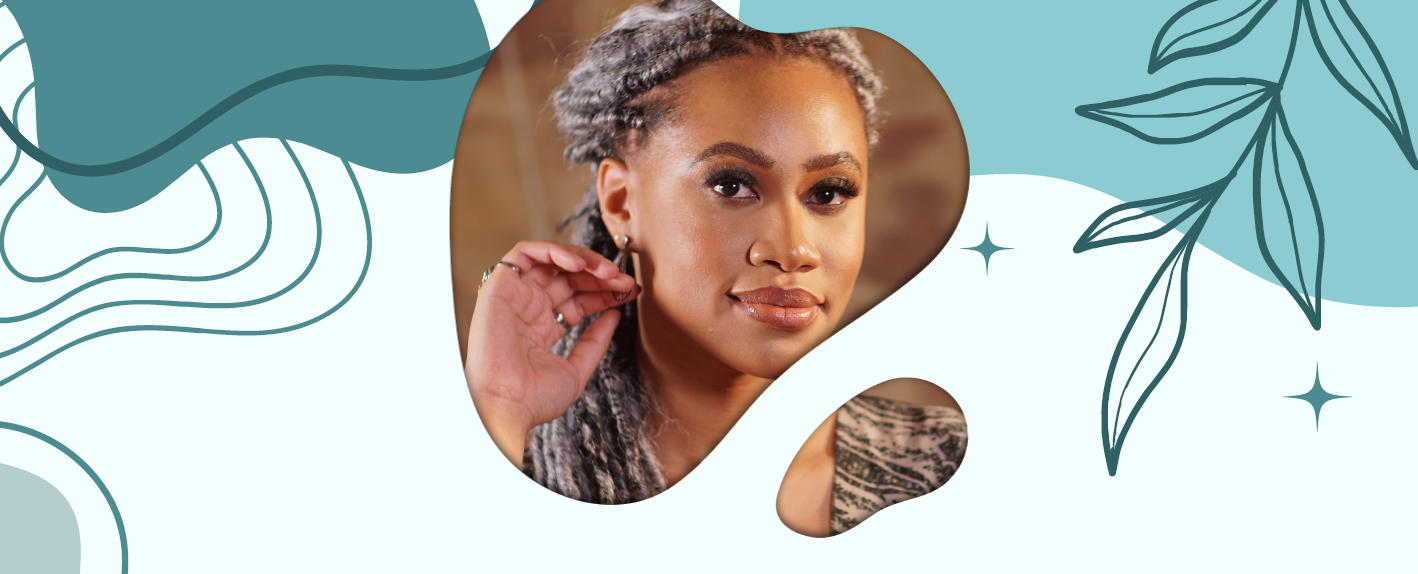
As a once young Black Jamaican Canadian woman navigating the mental health space, I’ve often felt like a work in progress…
This mini colouring and poetry booklet is simply to serve as a reminder that if you too find yourself navigating this space — you are never alone. For whatever its worth this is my attempt of seeing you, at whatever juncture you have found yourself. I know it may often feel like endings tohope… but I see you in this moment.
There is always space for you in this world to heal and find what thriving will look like in the storybook that is you.
You are not defined by traumas or hardships. Please know that it is not your role to stay out of sight. You are more than allowed to take up space luv. You are always valuable. You will always belong.
– From someone who’s still healing too
AFFRICA SPENCE
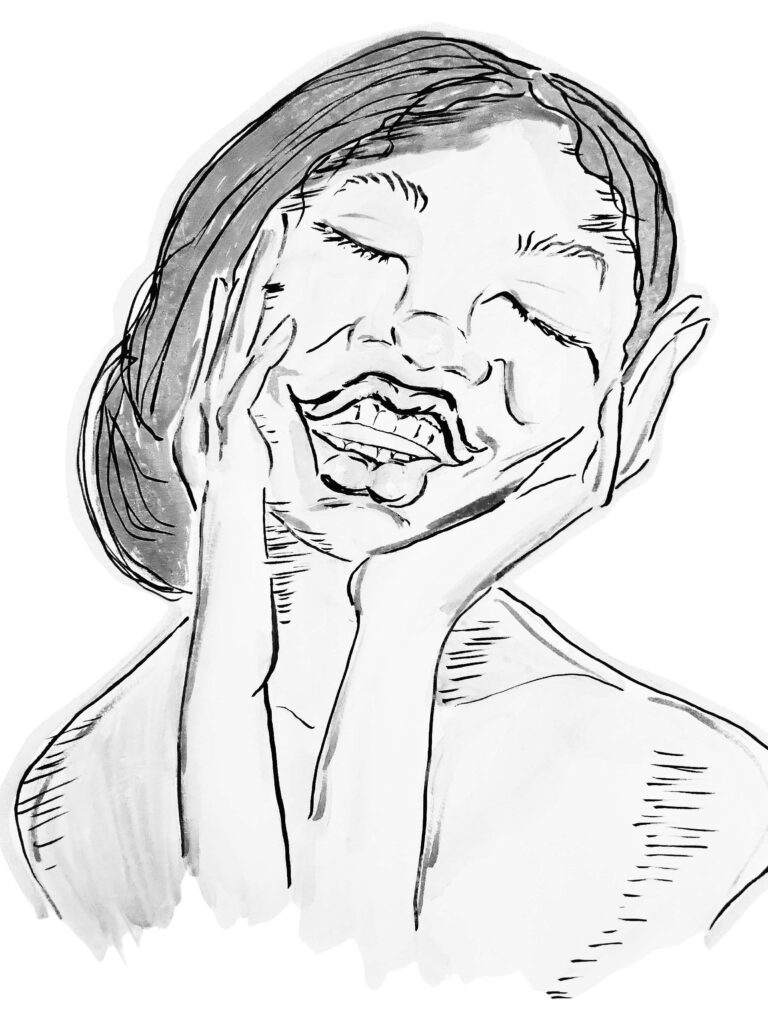
Look
Look at it…
No actually
Look.
The fates have woven
Life in thread.
Birthed you from fibres
And trust me,
You are cashmere
To the touch.
Soft in your movements.
Durable in your stance.
At times stains
Soak and resonate…
You’re still useful
You blanket the very essence
Of a soul.
Wrap your heart
In a delicate way.
Lay burdens.
Say laughter.
Stray never.
Eyes to sky
As it looks back at you.
Tether string
To whatever god
You hold dear.
You are the style
Of the century
Forever
Spinning
Trend setter.
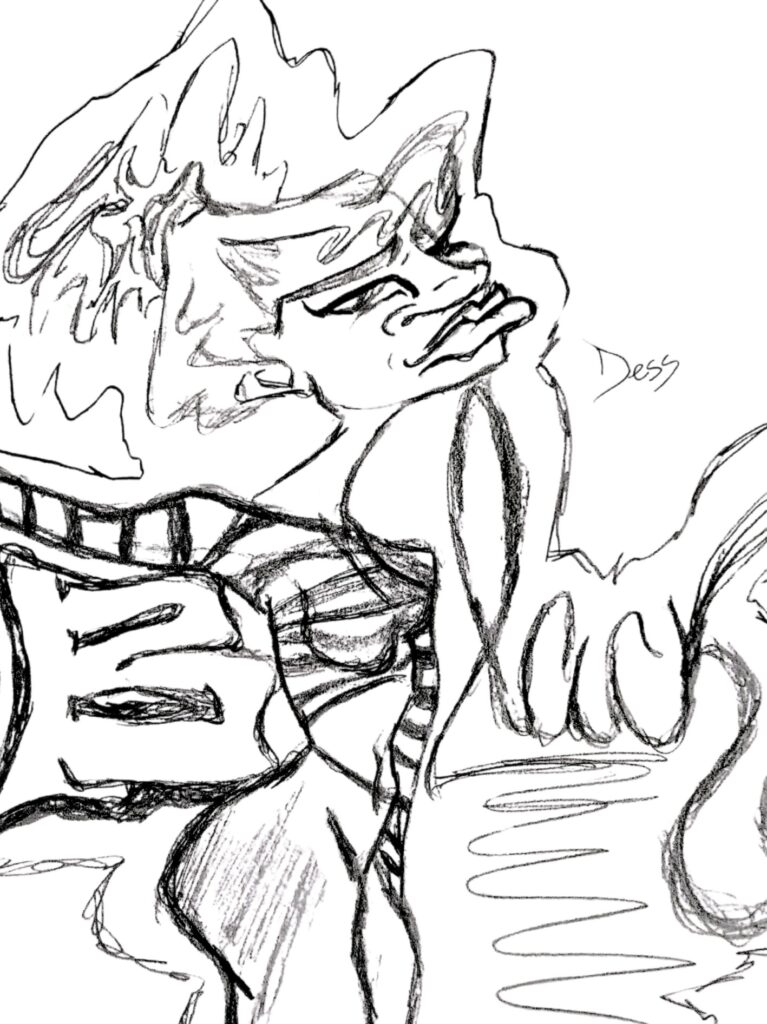
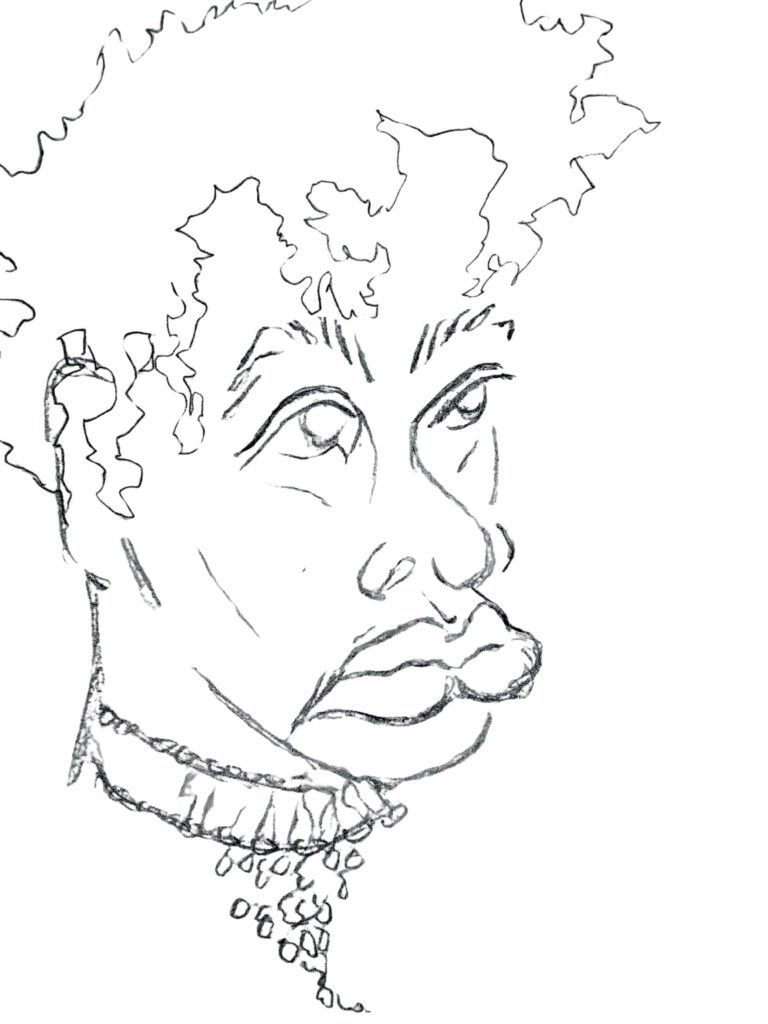
A step at a time
a step at a time.
leaves space to,
fast forward or rewind.
it makes you
Flow Down where
life takes you.
And though it might shake you,
a step at a time
slows it all down just enough
to strengthen your stance,
once you get back up
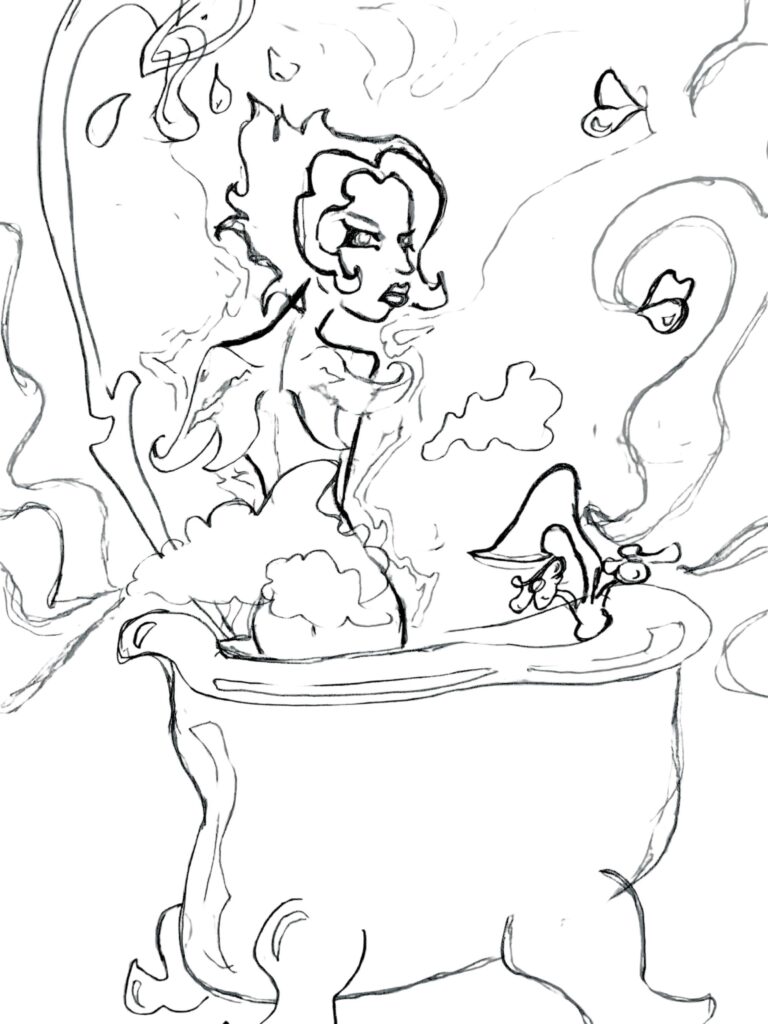
This Second
You speak life,
reignite
an unsparked neuron.
Broken wings,
reach new heights
a blueprint redrawn.
Let it dawn,
on you…
that this second,
and this second,
and this one,
and this…
Is a chance to dismiss,
the preconceived.
Conceive a new notion.
Limitless sky
or ocean, so deep
it leaves room to let ideas
not only fly but sink
then seep,
through and fill brittle cracks.
Always talking about that straw
that breaks backs.
And what aaaafter that?
If it is the laaaast breath,
do we dedicate it to death?
Life often pushes
us over edges
and just as often
life goes on,
each second.
It may add pain
without reason.
But an absence of passion
for the life you’re in,
will NOT pause
the world’s spin.
The sun will make its rotation,
and your eyes
may still burn
with its rise.
But know that this very second
and this second,
and this one
and this…
might shift, the focus
of sockets.
Reassess,
to profess, a wrinkle
at your eye’s side.
The one born out of laughter.
Because tragedy is too
damn sad to lose sight
of any ever after
thereafter…
Beautiful Day
It’s a beautiful day.
Let me rest.
Let me lay
away the moments
that leave lumps
in throats and shoulders.
Not getting any younger.
So linger…
Lay my fingers
on the stems of flowers and leaves.
Let that stroll home
make me so curious to weave
through new paths
and uncharted routes…
because
it’s a beautiful day…
and I refuse all work, all day.
No, not the work,
without the play 🙂
Black Mental Health
Key fact and insights about our community
Top barriers identified
- Racism & discrimination in care systems
- Cost and lack of health insurance coverage
- Long wait times for culturally appropriate services
- Language and cultural misunderstandings
- Stigma within some Black communities
- Lack of Black mental health providers
Source: Ottawa Public Health (2020). Mental Health of Ottawa’s Black Community: A Health Equity Report.
Key findings
- Black Canadians are often over-diagnosed with psychosis and under-diagnosed for mood disorders.
- Depression in Black men is often interpreted as aggression rather than sadness.
- Youth are more likely to be criminalized than referred for care when in crisis.
Source: Ottawa Public Health (2020). Mental Health of Ottawa’s Black Community: A Health Equity Report.
Protective cultural factors
- Spirituality and faith communities
- Family and intergenerational wisdom
- Music, dance, and storytelling
- Peer support & mutual aidStrong cultural identity
Source: Mental Health Commission of Canada (2021). Mental Health in BlackCommunities in Canada: A Snapshot.
Organizations to know
- Across Boundaries – Mental Health Services for racialized communities (Toronto)
- TAIBU Community Health Centre – Black health services in Scarborough
- Black Mental Health Canada – Advocacy and research
- The Nia Centre – Arts-based Black wellness hub
- Wanasah – Youth-centered mental health support
- Ase Community Foundation for Black Canadians with Disabilities
© Affrica Spence, 2025.
All artworks, images, and texts are published with the permission of the artist. The creation and publication of this work was made possible with the support of Canada Council for the Arts, Government of Canada, Ontario Arts Council, and Government of Ontario.